How to Budget for House Painting in NZ
Turn a rough painting estimate into a realistic, ready-to-spend budget. This guide shows you what to include, how much risk allowance to hold, which costs are commonly missed, and how to compare quotes without choosing on price alone.
How much should you budget for painting a house?
Do not begin with a generic figure for “a three-bedroom house” and assume it will fit your property. Two similar-sized homes can require very different amounts of sanding, filling, masking, access equipment and trim work. If you still need a starting number, use the NZ house painting cost calculator, then bring its range back to the planner below.
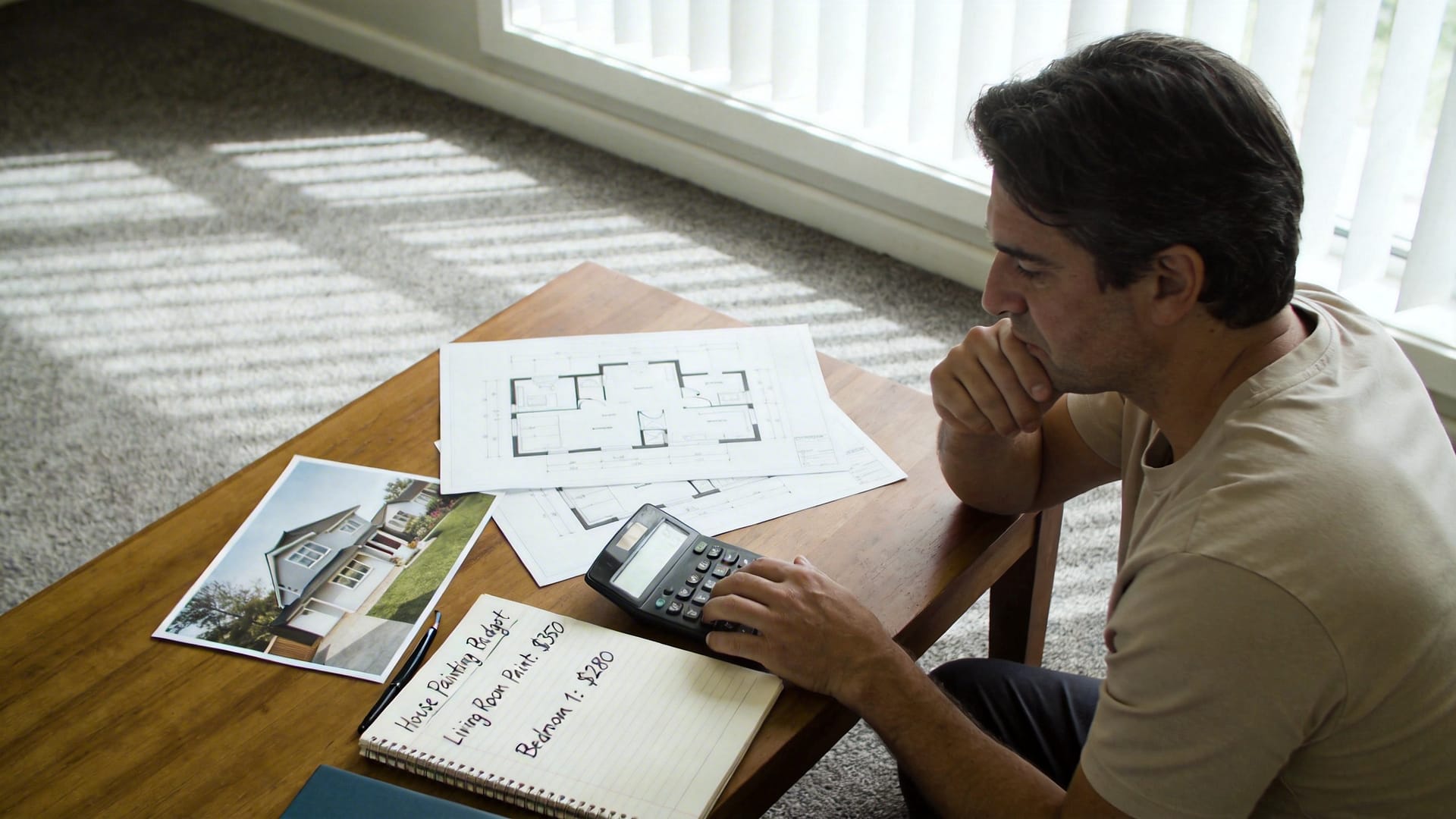
NZ house painting budget planner
Enter a calculator result, painter’s estimate or written quote. The tool adds any excluded GST, known extras and a reserve based on the project’s uncertainty. If you have a low-to-high estimate range, run the planner twice: once with each end of the range.
Planning tool only. It does not inspect the property or replace a site-specific quote. The reserve is calculated on the GST-adjusted base plus known extras.
Choose the right baseline before adding a buffer
A contingency cannot rescue a weak starting number. First, make sure the baseline covers the right project. If you want to understand current planning ranges before using a calculator, see how much it costs to paint a house in NZ. If you are checking an area-based allowance, the guide to paint cost per m² in NZ explains why square-metre pricing is only a starting point.
| Your project | Best baseline | Confirm before budgeting | Main uncertainty |
|---|---|---|---|
| Selected rooms | Room-by-room estimate or itemised quote | Walls, ceilings, doors and trim | Repairs, furniture and colour change |
| Full interior | Whole-house calculator or site quote | Occupied or empty; ceiling height; finish level | Stopping, staining and detailed joinery |
| Exterior repaint | Exterior painting cost calculator or site quote | Cladding, storeys, access, scaffold and repairs | Weathered coatings and hidden timber damage |
| Interior + exterior | Separate interior and exterior estimates first | Whether one contractor price includes every area | Large scope hides omissions more easily |
Important: floor area is not paintable surface area. A 150 m² floor plan does not mean there are 150 m² of walls, ceilings and exterior cladding to coat. Treat floor area as a scale indicator unless the pricing method clearly states otherwise.
The six layers of a reliable painting budget
The cleanest way to budget is to give every dollar a job. That lets you see whether a quote is genuinely cheaper or simply leaves more outside the price.
1. Core painting scope
Labour, normal consumables and the coating system for the listed surfaces. This should state which walls, ceilings, cladding, trims, doors, windows, fascias, soffits or other areas are included.
2. Preparation and repairs
Washing, mould treatment, scraping, sanding, filling, caulking, spot priming and any defined plaster or timber repair allowance. “Preparation as required” is too vague for a high-value project.
3. Access and site setup
Scaffolding, mobile platforms, difficult boundaries, steep ground, protection of landscaping, traffic management or extra setup time. Safe access is a real project requirement, not an optional cosmetic extra.
4. Homeowner-side costs
Moving or storing furniture, temporary accommodation, pet care, cleaning, parking, colour-consultation fees or work by a builder, glazier, roofer or electrician before painting.
5. Tax and payment timing
Confirm whether every figure includes GST and when deposits or progress payments fall due. A project can be affordable in total but still create a cash-flow problem if payments cluster together.
6. Contingency reserve
Money held by you for genuine unknowns or an approved scope change. It should not be used to make a visibly incomplete quote look affordable.
For a deeper list of items that tend to sit outside the first attractive number, read the hidden costs of house painting in NZ. Use that page as a pre-quote inspection list, then enter any confirmed extras into the planner above.
How to create your painting budget, step by step
-
Write a one-page scope
List each area and surface. For an interior, separate walls, ceilings, skirtings, architraves, windows and doors. For an exterior, separate cladding, eaves, fascia, joinery, baseboards and detached structures. Mark every item “include”, “exclude” or “price separately”.
-
Record the existing condition honestly
Note peeling, chalking, cracks, water stains, mould, bare timber, rotten sections, damaged plaster, rust and previous coating failure. Take wide photos for scale and close-ups for condition. A cheaper budget based on “good condition” is useless if the surfaces are not actually good.
-
Get an early planning range
Use the main calculator for an initial low, typical and high range. Treat it as a feasibility check—not a promise. If the high end is already unaffordable, narrow or stage the scope before spending time on formal quotes.
-
Separate known extras from unknown risk
If you already know scaffolding costs $X or a builder must replace weatherboards, that is a known cost. Add it explicitly. Do not hide it inside a general contingency percentage.
-
Request like-for-like written quotes
Give each painter the same scope and condition information. Then check products, number of coats, prep, exclusions, access, cleanup, GST, payment stages and the process for variations. Our guide to getting an accurate painting quote in New Zealand explains how to reduce the guesswork before pricing.
-
Select the quote before setting the final reserve
A detailed quote with inspected surfaces carries less uncertainty than a phone estimate based on floor area. Set the reserve after you understand how much risk remains—not before.
-
Fund the whole target, not only the deposit
Set aside the GST-inclusive contract amount, known extras and contingency. Keep the reserve uncommitted unless you approve a genuine change. Confirm that the payment schedule matches your available cash.
Three sample house painting budgets
These examples show the method; they are not claims about what your home should cost. Actual pricing depends on the inspected scope, location, condition, access and coating system.
Interior refresh
- Written quote incl. GST: $9,500
- Known extras: $600
- Reserve: 5% = $505
Sound surfaces, empty rooms and a clearly defined walls-and-ceilings scope.
Weatherboard exterior
- Painting quote incl. GST: $18,000
- Scaffold + repairs: $5,500
- Reserve: 15% = $3,525
Older coating, two-storey access and separate timber repair work.
Combined repaint
- Estimate excl. GST: $25,000
- GST: $3,750; extras: $2,000
- Reserve: 15% = $4,613
Early-stage estimate with a broad interior-and-exterior scope and unresolved details.
How much contingency should you allow?
There is no universal percentage that fits every painting job. The reserve should reflect what is still unknown after the scope and quote are reviewed. The bands below are a planning framework used by this guide, not a pricing standard or permission for a contractor to charge more automatically.
| Reserve | When it may fit | What should already be known | Warning sign |
|---|---|---|---|
| 5% | Simple interior refresh; sound surfaces; empty or easy-access rooms | Detailed scope, coating system and small repairs | Do not use 5% if damage or access has not been inspected |
| 10% | Typical repaint with average condition and moderate detail | Most prep and exclusions identified | Check whether ceilings, trim and moving are missing |
| 15% | Exterior work, older homes, partial inspection or uncertain repairs | Access plan and obvious deterioration priced | A reserve is not a substitute for a scaffold or repair quote |
| 20% | Poor condition, broad estimate, staged repairs or significant unknowns | Hazards assessed and specialist work separated | If the risk is foreseeable, define and price it before starting |
A quote that says “all prep included” may still leave uncertainty if it does not describe the standard of prep or limits on repair work. Before accepting, check what should be included in a house painting quote and ask how discoveries will be documented, priced and approved.
Compare painting quotes by scope, not by the bottom line
Suppose Quote A is $3,000 cheaper than Quote B. That difference is only a saving if both cover comparable work. If Quote A excludes scaffold, premium topcoats, window preparation or cleanup, it may create the higher final spend.
| Check | What a useful quote should tell you | Question to ask if it is vague |
|---|---|---|
| Scope | Every included and excluded surface | “Are ceilings, doors, window frames, eaves and fascia included?” |
| Preparation | Washing, scraping, sanding, filling, sealing and priming | “What preparation is allowed for, and what becomes an extra?” |
| Coating system | Brand/product type, primer where needed and coat count | “Is the coat count fixed, or subject to coverage?” |
| Access | Scaffold/platform responsibility and difficult sections | “Is safe access included for every painted area?” |
| Price | GST status, exclusions, deposit and payment stages | “What could legitimately change this price?” |
| Variations | Written approval process before extra work proceeds | “Will I receive the price and time impact before approving?” |
New Zealand Consumer Protection says an estimate is not a fixed price, while a quote is an offer to do a job for a specified price; an accepted quote can change where you agree to extra work or the scope changes. For the painting-specific implications, see painting quote vs estimate in NZ.
How to reduce the budget without damaging the outcome
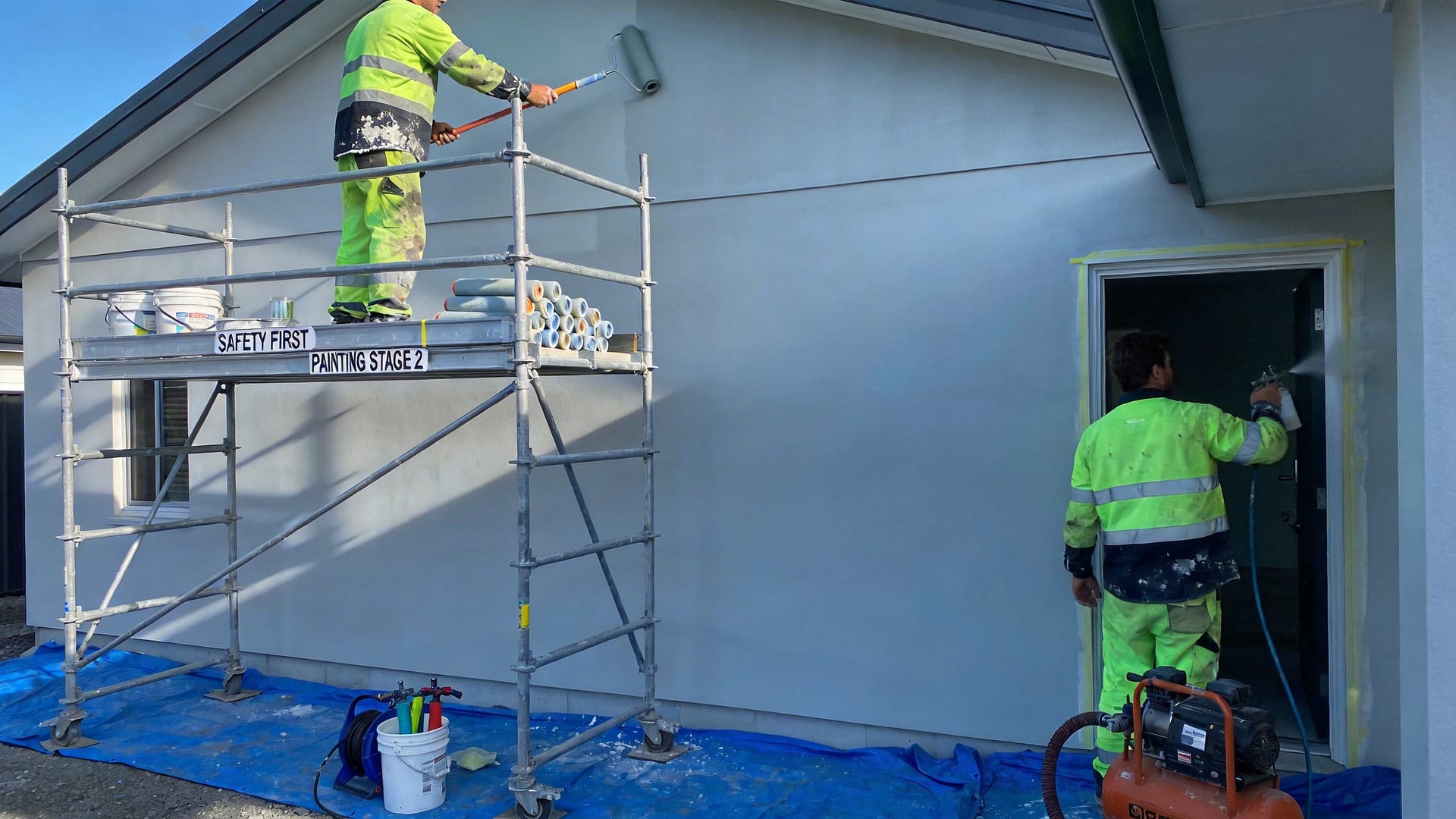
The safest saving is usually a smaller, clearly finished scope—not weaker preparation across the whole house. If the target budget is too high, ask for separate prices so you can make a deliberate choice.
Prioritise protection
Deal first with failing exterior coatings, bare timber, water entry points and other surfaces where delay may lead to more expensive repairs.
Stage by complete areas
Finish the exterior before cosmetic interiors, or complete bedrooms before living areas. Avoid stopping halfway through a coating system on one surface.
Simplify the colour scheme
Fewer colours can reduce masking, cutting-in and product changes. Large dark-to-light shifts may still need extra coverage, so ask before choosing.
Prepare the site, if agreed
Empty rooms, remove small fixtures and provide clear access only where the painter agrees. Do not take on hazardous prep or height work simply to save money.
Older paint, access and maintenance can change the plan
Old coatings may require a safer method
If an older home may contain lead-based paint, do not budget for aggressive sanding or stripping as if it were ordinary preparation. The Ministry of Health publishes guidance for property owners and painting contractors on managing lead-based paint. Testing, containment, personal protection and specialist disposal can change both the method and the cost.
High work needs a real access plan
Do not remove scaffold or suitable platforms from the budget just to make an exterior project fit. WorkSafe identifies working at height as a serious risk and publishes guidance on scaffolding and other controls. Ask who supplies access, which elevations it covers, how long it remains on site and whether alterations are included.
Maintenance timing affects lifetime cost
A budget decision should consider what happens after the painters leave. BRANZ recommends regular inspection and maintenance of painted exterior surfaces; delaying small coating repairs can allow a limited maintenance task to become broader preparation and repair later.
30-second house painting budget check
- The scope names every included surface.
- Prep and repair allowances are described.
- Coating products and coat count are clear.
- Access or scaffold responsibility is confirmed.
- GST status is written on every figure.
- Known third-party work has its own allowance.
- Exclusions and homeowner tasks are listed.
- Payment dates fit your cash flow.
- Variations need approval before work proceeds.
- Your contingency remains outside the contract price.
If you cannot tick most of these, you do not yet have a complete budget—you have an opening number.
House painting budget FAQ
How much should I set aside for house painting in NZ?
Set aside the GST-inclusive estimate or quote for your defined scope, all known costs outside it, and a separate risk reserve. This guide uses 5% for a simple, well-defined interior refresh, 10% for a typical repaint, and 15–20% where older surfaces, exterior deterioration, access or repairs remain uncertain. Use the property-specific calculator and written quotes for the starting figure rather than copying another homeowner’s total.
Should a painting budget include GST?
Yes. Your funding target should reflect the amount you will actually pay. Check whether each estimate, quote and third-party allowance includes GST. If a planning figure excludes GST, add 15% before applying your contingency.
Is 10% contingency enough for a painting project?
It may be enough for a standard repaint where the scope, surface condition, preparation and access have been checked. It may be too little for an older exterior, peeling coatings, possible timber damage or a broad remote estimate. It may be more than needed for a small interior refresh with a detailed fixed quote and sound surfaces. Match the reserve to the remaining uncertainty.
What is most often left out of a house painting budget?
Common omissions include GST, scaffold or access equipment, repairs by other trades, detailed window and trim work, furniture moving or storage, extra coats after a major colour change, specialist treatment of old coatings, and approved variations. The exact omissions depend on the quote, so compare scope line by line.
Should I get an estimate or a quote before setting my budget?
Use an estimate or calculator range to decide whether the project is feasible. When the scope is clear and you are ready to hire, obtain a written quote based on the actual property. Build the final funding target from the quote, known outside costs and a contingency you control.
Is it cheaper to paint the interior and exterior together?
There may be setup or scheduling efficiencies, but combining them is not automatically cheaper. Ask for the interior, exterior and combined options to be priced separately. This reveals any genuine saving and lets you stage the work if the combined target strains the budget.
How can I lower the cost without accepting a poor paint job?
Reduce or stage the scope, simplify the colour plan, empty rooms where agreed, and prioritise weather-protection work before cosmetic areas. Avoid cutting required preparation, safe access, primer or repairs. Saving money by shortening the life of the coating is usually only postponing the cost.
Can I use the budget planner instead of getting a painter’s quote?
No. The planner organises the numbers you already have and adds a risk reserve. It cannot inspect substrate condition, moisture, damage, height access or hazardous old coatings. Use it for planning, then confirm the job with a detailed site-specific quote.
How this guide was built
This page separates a painting budget into four auditable parts: base scope, tax adjustment, known extras and an owner-held contingency. The percentages are transparent planning bands, not contractor pricing rules. They are designed to make uncertainty visible and should be replaced with actual inspected costs whenever those become known.
- New Zealand Consumer Protection: Quotes and estimates — the practical difference between an estimate and a quote, and when a quoted price may change.
- Ministry of Health: Guidelines for the Management of Lead-based Paint — guidance for owners and contractors where old paint may create a health risk.
- WorkSafe New Zealand: Scaffolding in New Zealand — practical safety guidance for work at height.
- BRANZ: Maintenance — maintenance planning for New Zealand homes and exterior coatings.
Build the range first. Approve the quote second.
A good house painting budget does not predict every surprise. It makes sure a surprise does not derail the project. Start with a property-specific range, define the scope, add known costs and keep the contingency under your control.
Estimates on this website are for early-stage planning only. They are not quotes, valuations or professional inspections. Actual prices vary by property, scope, condition, access, products, location and contractor.