Hidden Costs of House Painting in NZ: 14 Extras That Can Change Your Quote
The price on page one is not always the final project cost. Preparation, repairs, scaffolding, extra coats, hazardous-material controls and vague exclusions can add hundreds or thousands of dollars—or become a dispute if nobody agreed on the scope.
Short answer: the most common hidden painting costs in New Zealand are extra surface preparation, plaster or timber repairs, access equipment, additional coats, lead-paint or asbestos precautions, excluded ceilings and trims, furniture protection, specialist primers, cleanup and GST. Before accepting a price, confirm exactly what is included and whether you have a fixed quote or only an estimate.
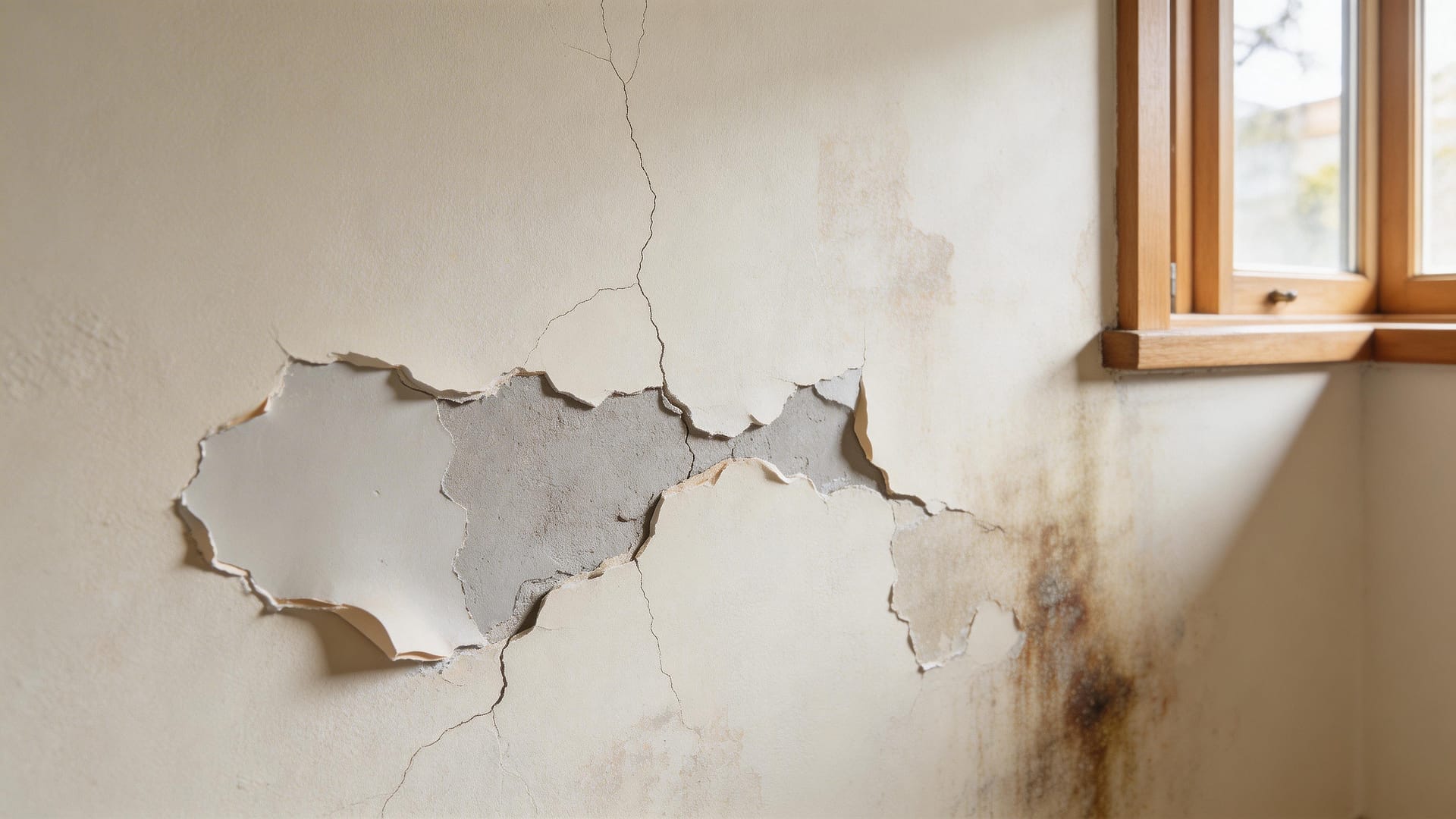
What are the hidden costs of painting a house in NZ?
A hidden cost is not necessarily a dishonest charge. It may be work that could not be confirmed before washing, scraping or opening a damaged area. The problem is scope uncertainty: the homeowner assumes the item is included while the painter assumes it will be charged separately.
The 14 items below are the ones to resolve before you compare headline prices:
- Extra surface preparation beyond “standard prep”
- Plaster, cladding or timber repairs uncovered on site
- Scaffolding and difficult access for high or sloping areas
- Additional coats for colour change or poor coverage
- Lead-paint precautions on older painted surfaces
- Asbestos assessment or controls before disturbing materials
- Mould, stains and moisture treatment before topcoats
- Primer and specialist coating systems not in the base allowance
- Ceilings, doors, trims and joinery excluded from “walls”
- Furniture moving and protection in an occupied home
- Washing, masking, cleanup and waste treated as add-ons
- Paint upgrades and colour complexity beyond the assumed product
- Weather and return visits that change access or sequencing
- GST, travel, parking or admin charges missing from the displayed total
The fastest way to spot a risky price
Look for undefined phrases such as “prep as required”, “minor repairs included”, “two coats where necessary” or “access by owner”. Ask the painter to turn each phrase into a measurable allowance, exclusion or variation rule.
Quick cost-impact guide: which extras can move the price most?
Exact dollars depend on the property, so a national flat rate would create false precision. This table shows the likely scale of the risk and the safest way to price it before work starts.
| Possible extra | Likely impact | How it is commonly priced | Best protection |
|---|---|---|---|
| Minor filling and spot priming | Low–medium | Included allowance or hourly variation | State how many hours or what degree of filling is included. |
| Full plaster repair or skim coating | Medium–high | Separate plasterer scope | Request a separate written price before painting continues. |
| Rotten weatherboards, fascia or window timber | Medium–high | Builder or carpenter variation | Define who diagnoses, authorises and completes repairs. |
| One extra finish coat over a large area | Medium–high | Additional labour plus paint | Name the coating system and number of coats by surface. |
| Scaffolding or specialist height access | High | Supplier quote, hire period and possible extensions | Attach the access allowance and clarify extension-hire responsibility. |
| Lead or asbestos-related testing and controls | Potentially high | Testing and/or specialist work | Identify the risk before sanding, scraping or waterblasting. |
| Furniture, storage and extra protection | Low–medium | Labour allowance or owner responsibility | Record who moves furniture and how rooms must be presented. |
| GST not included in an advertised price | High | 15% added to the stated subtotal | Ask for the final total explicitly marked “including GST”. |
For a realistic baseline before testing these extras, compare the scope with our guide to house painting costs in NZ with real price examples. If you want to model your own property instead, use the House Painting Cost Calculator NZ.
Free painting quote risk checker
This does not estimate the final bill. It shows how much uncertainty should be resolved before you accept the price.
Your result
The 14 hidden house-painting costs explained
1. Preparation beyond the painter’s “standard allowance”
“Prepare surfaces” can mean a quick sand and spot-fill, or days of washing, scraping, feather-sanding, gap sealing, masking, dust control and priming. If existing coatings are failing, the preparation workload can exceed the application time.
Ask: Which preparation steps are included for each surface, and what observable condition would trigger extra labour?
2. Plaster, cladding and timber repairs
Paint cannot repair loose plaster, active leaks, rotten weatherboards or structurally damaged joinery. A painter may complete small cosmetic filling but refer substantial work to a plasterer, builder or carpenter. The difference between “filling” and “repair” must be written down.
Ask: What minor repairs are included, who handles larger repairs, and will you receive a price before that work starts?
3. Scaffolding, edge protection and difficult access
A two-storey house, steep driveway, narrow side path, conservatory roof, high stairwell or sloping section can slow every stage. Costs may include delivery, erection, hire, inspection, dismantling and an extension if the hire period expires.
Ask: Is all access equipment included, for how long, and who pays additional hire if weather or repairs extend the programme?
4. Extra coats after a strong colour change
“Two coats” is not the same as “coverage to an even finish”. Deep colours, bright feature walls, sharp dark-to-light changes, porous repairs and bare patches may need an additional coat or a tinted undercoat. Confirm the promised finish, not only the nominal coat count.
Ask: Does the fixed price cover the specified coating system to achieve even coverage, and how would an extra coat be approved?
5. Lead-paint testing and safer preparation
Many older New Zealand buildings have been painted with lead-based coatings. Disturbing old paint can require different containment, collection, personal protection and cleanup methods from an ordinary sand-and-repaint job. That additional work is not a decorative upgrade—it manages a health risk.
Ask: Has the existing coating been assessed for lead, and what safe-work controls are included if lead is present?
6. Asbestos assessment or specialist controls
WorkSafe advises that New Zealand homes built before 1 January 2000 may contain asbestos materials. Examples relevant to decorating can include textured ceilings, wall or ceiling panels and fibre-cement products. You cannot confirm asbestos by appearance alone; testing may be needed before sanding, scraping, drilling or waterblasting.
Ask: Could the planned preparation disturb a suspect material, and who is responsible for assessment, sampling and any required controls?
Important safety boundary
Do not treat lead or asbestos as a DIY budgeting shortcut. If a material may be hazardous, stop before disturbing it and use current WorkSafe guidance and an appropriate professional. The extra cost is secondary to preventing contamination and exposure.
7. Mould, stains and unresolved moisture
Mould killing, washing, drying time, stain-blocking primer and extra ventilation may sit outside a standard repaint. More importantly, paint should not be used to conceal an active leak or unresolved moisture source. Diagnosis and repair can become a separate project.
Ask: Is the stain cosmetic or active, what treatment is included, and must another trade resolve the source first?
8. Primer, sealers and specialist coatings
New plaster, stains, bare timber, rust, tannin bleed, high-moisture rooms and incompatible existing coatings may require a product that was not allowed for in a simple “two topcoats” price. Specialist products add materials and another application stage.
Ask: Which primers or sealers are included, and what product will be used on bare, stained or repaired areas?
9. Ceilings, doors, skirtings, frames and other details
“Paint three bedrooms” may mean walls only. Ceilings, wardrobes, window reveals, doors, frames, skirtings, cornices and trims create a large amount of cutting-in and detailed labour. On an exterior, clarify soffits, fascia, gutters, downpipes, windows, doors, balustrades and foundations.
Ask: Can the quote list every surface included and excluded by room or elevation?
10. Furniture moving, protection and daily setup
Painting an empty house is more productive than working around beds, cabinets, pets and residents. Repeated moving, covering, uncovering and cleaning can add labour. Off-site storage or temporary accommodation is a homeowner cost that never appears in the painter’s total.
Ask: How empty must each room be, who moves heavy items and what protection is included?
11. Washing, masking, cleanup and disposal
Exterior washing, window masking, protection of paths and plants, daily cleanup, removal of paint debris and final rubbish disposal should not be assumed. These tasks may be included in a comprehensive quote or separated from a low headline price.
Ask: Who protects surrounding property, removes debris and leaves the site ready for use?
12. Paint brand, finish, colour and upgrade charges
A price may assume one trade-range product, standard white ceilings and a limited number of colours. Premium systems, low-sheen versus enamel decisions, multiple feature colours, sample work and colour consultancy can alter materials and labour.
Ask: Are brand, exact product line, sheen, colour count and colour-consultation costs named in the quote?
13. Weather delays and return visits
Rain, wind, dew, cold surfaces and high humidity can interrupt exterior preparation and coating. A genuine fixed quote should not automatically become more expensive simply because ordinary weather slows the painter, but extended scaffold hire, changed sequencing or owner-requested return visits may have separate consequences if the contract says so.
Ask: How are weather delays handled, what hire period is allowed and which delays can create a variation?
14. GST, travel, parking and administration charges
Compare the amount you will actually pay. Confirm whether GST is included and whether travel, central-city parking, permits, colour changes or credit-card fees can be added later. An attractive subtotal is not comparable with another contractor’s GST-inclusive final price.
Ask: Is this the complete GST-inclusive total for the written scope, subject only to variations I approve?
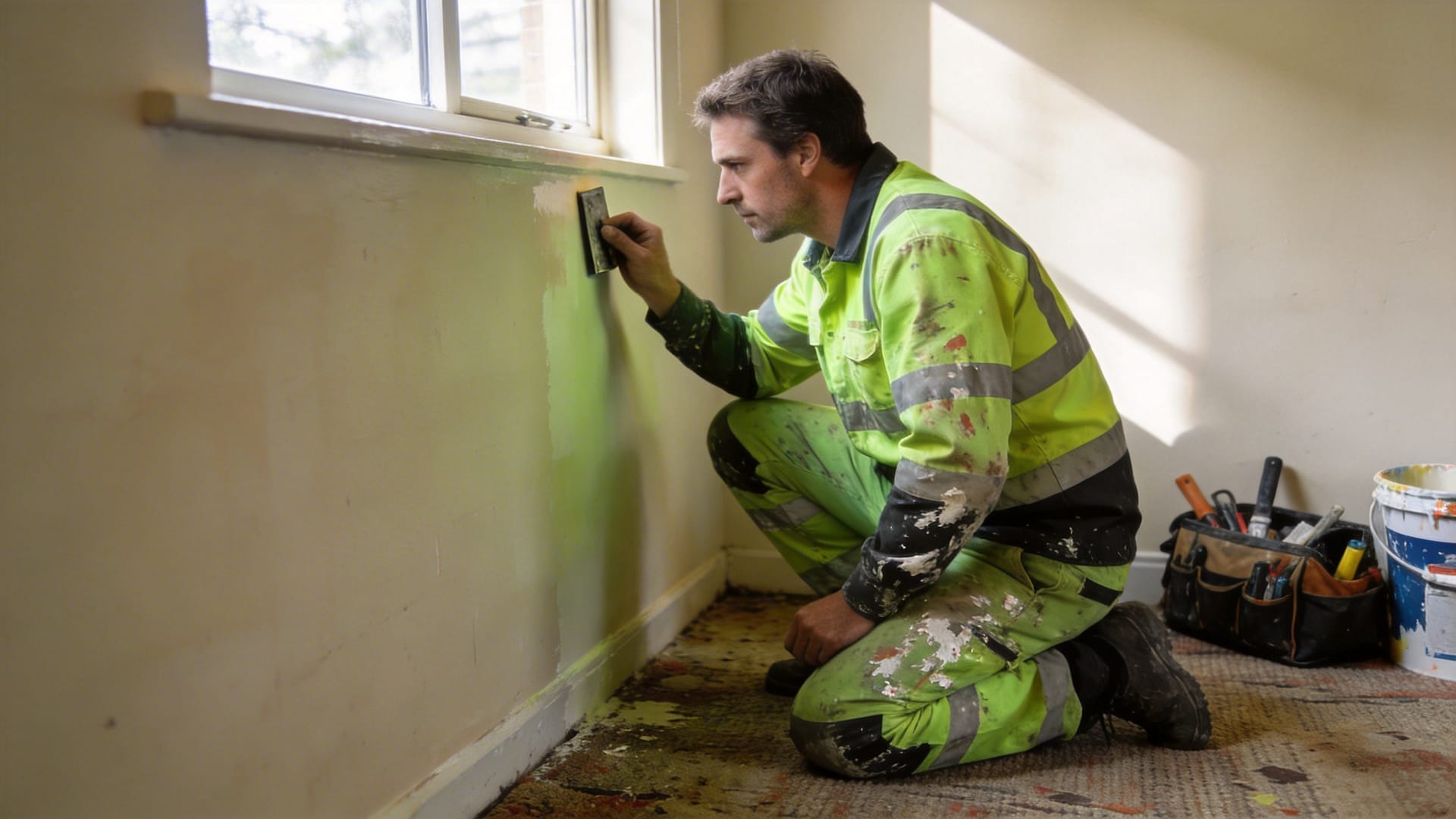
Why older NZ homes create the biggest painting-cost surprises
Villas, bungalows and older weatherboard homes can have multiple coating generations, failing putty, split boards, hidden decay, chalking, moisture history and ornate joinery. The age alone does not prove a costly problem, but it raises the value of investigation before a firm price is accepted.
Weatherboard exterior
Loose coatings are scraped back, exposing bare timber and local rot. The price can move through extra priming, carpentry and access time.
Textured ceiling
A pre-2000 ceiling may need assessment before preparation. Testing and a different work method can change both timing and scope.
Previously patched interior
New light reveals uneven repairs. A decorative repaint becomes plaster correction, sealing and then painting.
The safest approach is a site inspection that records suspect coatings, cladding condition, moisture staining, access, joinery and the expected preparation standard. This is also why it helps to understand what affects house painting cost the most before comparing homes only by bedroom count or floor area.
Interior vs exterior: where the hidden costs differ
Interior repaint risks
- Ceilings and trims assumed but not included
- Wall repair standard not defined
- Stain blocking after leaks or smoke
- Furniture moving and room-by-room setup
- Extra coats after strong colour changes
- Textured ceiling or panel material concerns
Exterior repaint risks
- Scaffolding and access-hire extensions
- Rotten boards, fascia or window timber
- Lead-safe preparation of old coatings
- Washing, masking and environmental cleanup
- Weather delays and restricted coating windows
- Extra primer on exposed or porous areas
Quote vs estimate in NZ: can the painter charge more?
The document type matters. New Zealand Consumer Protection describes a quote as an offer to complete the job for an exact price. After you accept a fixed quote, the provider normally cannot charge more unless you agree to extra work or the scope changes. An estimate is a carefully calculated approximation; Consumer Protection says the final cost should generally be within 10–15% of the estimate.
| Document | What it means | What to do before accepting |
|---|---|---|
| Fixed quote | An agreed price for the stated scope, unless you approve a variation. | Make the scope, exclusions, products and variation process specific. |
| Estimate | A reasoned approximation rather than a guaranteed total. | Ask which unknowns could move it and request a cap or fixed prices for known parts. |
| Provisional sum or allowance | A placeholder for an item that cannot yet be priced firmly. | Record the allowance, what it covers and how the final amount will be evidenced. |
| Variation | A change to the agreed work, price, product or method. | Require written description, price and approval before the varied work proceeds. |
Practical rule: no surprise variation after the work
When an unexpected condition is found, ask for photographs, an explanation, the proposed remedy, the price and any timeline effect. Approve or decline it in writing before the additional work starts. Keep the original quote and every agreed change together.
For a focused explanation of preparation wording, read does a painting quote include prep work in NZ?
What a complete house-painting quote should include
You do not need a 30-page contract for a simple repaint. You do need enough detail for two painters to be compared on the same job.
12-point quote checklist
- Property address and exact rooms, elevations or surfaces
- Preparation steps and the standard of repair included
- Paint brand, product line, sheen and colour count
- Primer, sealer and number of finish coats by surface
- Ceilings, doors, frames, trims and joinery inclusions
- Washing, masking, furniture moving and protection duties
- Scaffolding, access equipment and assumed hire period
- Lead, asbestos, mould, moisture and rotten-timber exclusions
- Start window, estimated duration and weather-delay process
- Cleanup, waste removal and final touch-up inspection
- Payment schedule, warranty and variation approval process
- Final price clearly marked as including or excluding GST
When an extra charge is fair—and when to push back
A variation may be reasonable when…
- A concealed condition could not reasonably be inspected earlier.
- You changed the colour, product, rooms or level of finish.
- The painter shows what was found and why the method must change.
- You receive and approve the added price before the work continues.
Push back and ask for evidence when…
- The item was clearly included in the accepted fixed quote.
- The added charge appears only on the final invoice.
- “Extra prep” is claimed without description, photos or hours.
- The contractor proceeds without your approval despite having time to ask.
How to avoid hidden painting costs before work starts
- Use the same scope for every painter. List the rooms, elevations, surfaces and finish expectations so the quotes are comparable.
- Request a site inspection. Remote pricing can be useful early, but older, damaged or access-heavy properties deserve closer inspection.
- Separate known work from unknown work. Fix a price for the core repaint and use defined allowances only where uncertainty genuinely remains.
- Ask what is excluded. Exclusions often reveal more than a general “included” paragraph.
- Confirm the variation process. No extra work without written description, cost and approval.
- Keep a sensible project reserve. A reserve is for genuine discoveries, not permission for an unclear quote.
- Compare the whole price. Check GST, scaffold, repairs, coatings, cleanup and protection—not just the number in large type.
New Zealand guidance used in this guide
This article combines practical painting-scope analysis with current New Zealand public guidance. It provides general budgeting information, not legal, building or hazardous-material advice.
- Consumer Protection — Quotes and estimates: the distinction between fixed quotes, estimates and agreed variations.
- WorkSafe New Zealand — Managing lead-based paint: health risks and safer management of older painted surfaces.
- WorkSafe New Zealand — Asbestos in the home: pre-2000 material risk and examples of possible asbestos-containing products.
FAQ: hidden house-painting costs in New Zealand
What is the most common hidden cost of house painting?
Extra preparation is the most common surprise. Washing, scraping, sanding, filling, sealing and priming can expand quickly when the existing coating or substrate is in worse condition than assumed.
Can a painter charge more than a fixed quote in NZ?
New Zealand Consumer Protection says a provider must normally complete work within a fixed quoted cost unless you agree to a variation. The written scope matters: owner-requested changes or genuinely different work may justify an agreed extra.
How much can an estimate increase in New Zealand?
Consumer Protection says the final cost should generally be within 10–15% of a carefully calculated estimate. An estimate is not the same as a fixed quote, so ask what assumptions and unknowns sit behind it.
Is scaffolding normally included in an exterior painting quote?
It may be included, quoted separately or excluded. Confirm the supplier price, erection and dismantling, hire period, inspections and responsibility for extension hire. Never assume “access included” means full scaffolding.
Should wall and timber repairs be included?
Small filling and spot repairs may be included, while plaster reconstruction, leak repairs and rotten timber replacement are commonly separate. The quote should define the boundary and the approval process.
Why can changing paint colour add cost?
A strong light-to-dark, dark-to-light or vivid colour change may require a tinted undercoat or extra finish coat for even coverage. Multiple colours also create more setup, cutting-in and leftover product.
Do older NZ homes cost more to paint?
Often, but not automatically. Older homes are more likely to have layered coatings, weathered timber, failed putty, ornate details, lead paint or pre-2000 building materials that need assessment. Condition and access matter more than age alone.
Can a painter paint over mould or water stains?
The surface may need cleaning, drying, treatment and stain-blocking first. If moisture is active, the source should be diagnosed and fixed before the area is treated as a normal decorative repaint.
Should a house-painting quote include GST?
Ask for the final amount you will pay and make sure the document clearly states whether GST is included. When comparing prices, convert every quote to a GST-inclusive total.
How can I compare two painting quotes fairly?
Use the same written scope, then compare surface preparation, repairs, coat numbers, products, access, exclusions, protection, cleanup, GST and the variation process. The cheaper number is not cheaper if it omits essential work.
Turn the hidden costs into visible assumptions
Start with an independent planning range, then use the checklist above to request comparable written quotes. A good decision comes from matching price to scope—not guessing which painter silently included more.