When Should You Repaint Your House in NZ?
For many New Zealand homes, the right time to repaint is before peeling becomes widespread. A quality three-coat acrylic system on timber weatherboards may perform for about 7–10 years, but exposed sills, coastal elevations, dark colours and a poorly prepared previous job can need attention sooner. Use the age of the paint as a reminder to inspect—not as the final decision.
Evidence checked 11 August 2026 · Written for New Zealand homeowners · Exterior repainting is the primary focus
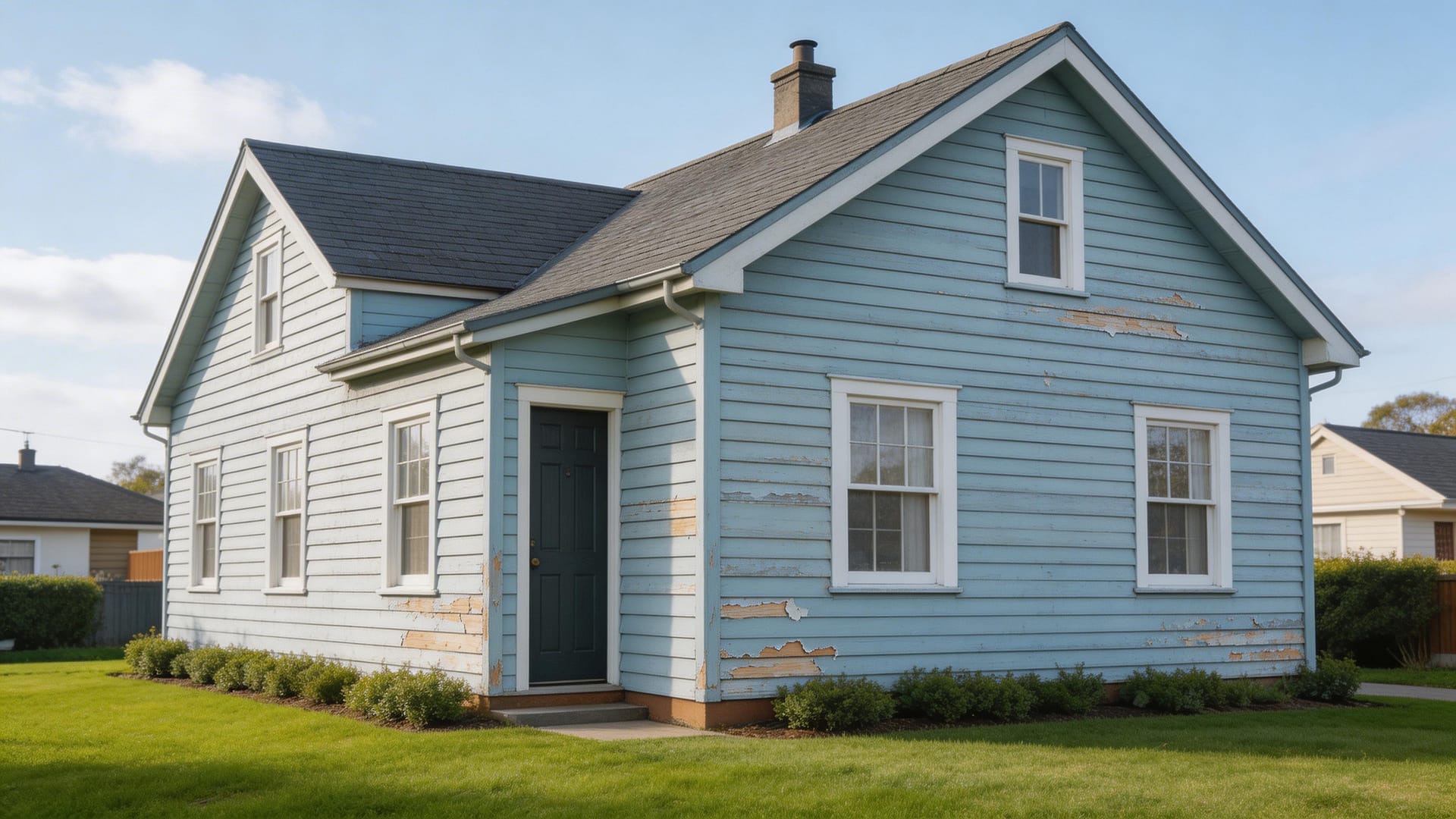
Do you need washing, repairs, or a repaint?
“How many years has it been?” is useful, but condition is more useful. Walk around the property in daylight and classify the worst area you can find. The action should be based on that weakest area—not the best-looking wall.
Wash and monitor
The coating is intact and evenly coloured, with dirt or light organic growth but no cracking, lifting or bare material.
Plan within 6–12 months
Noticeable fading, loss of sheen or chalking is developing, but the film remains mostly sound and the substrate is protected.
Quote and schedule
Cracks, lifting edges, failed sealant, exposed primer or isolated bare patches show that protection is breaking down.
Repair the cause
Soft timber, repeated bubbling, staining below joints or widespread coating failure may point to moisture or substrate damage.
The cost-saving window: repainting is usually simplest while the old coating is weathered but still substantially bonded. Once large areas must be stripped, timber repaired, fixings treated or joints rebuilt, preparation can become a much larger part of the project.
How often should an NZ house be repainted?
There is no honest single interval for every house. Coating type, substrate, film build, preparation and microclimate all change the first-maintenance date. The figures below are planning benchmarks drawn from New Zealand guidance; inspect earlier and let visible condition override the calendar.
| Painted surface or system | Useful NZ planning benchmark | Why it may need earlier work | First checks to make |
|---|---|---|---|
| Timber weatherboards with a quality three-coat acrylic system | About 7–10 years to major maintenance | Exposed elevation, dark colour, timber movement, weak previous coating or poor preparation | Chalking, splits at laps and joins, flaking edges, exposed primer |
| Window sills and other sloping painted surfaces | About 5–7 years for an acrylic system | Greater UV exposure, water sitting on the surface and vulnerable end grain | Top and underside of sills, corners, glazing edges, softness or open joints |
| Standard acrylic coating on exterior metal | About 5–7 years, with wide variation by environment and system | Salt, corrosion at cut edges or fixings, unsuitable primer and sheltered areas that trap deposits | Rust staining, loss of adhesion, corrosion at fasteners, coating breakdown under eaves |
| Exterior timber stain | Often a shorter recoat cycle; MBIE notes roughly 3–5 years for exterior stains | Less UV shielding than an opaque paint film and uneven erosion across exposed faces | Colour loss, dry-looking timber, water absorption and faster wear on sunny areas |
| Unknown or older paint system | Do not estimate from age alone | The coating type, number of coats, adhesion and previous preparation are unknown | Inspect and test condition before budgeting for a simple recoat |
These are maintenance expectations, not promises for a particular property. For a deeper breakdown by coating, surface and exposure, see how long exterior paint lasts in NZ.
8 signs your house is due for repainting
Widespread peeling is a late sign. The more valuable inspection clues appear earlier, when a maintenance repaint may still protect the existing substrate without extensive repair.
Fading differs from one elevation to another
Compare the most exposed wall with a sheltered wall. Uneven bleaching or a tired, patchy finish shows that UV and weather are ageing the system at different rates.
A clean cloth picks up powder
A fine residue can indicate chalking as the coating erodes. Chalking needs proper cleaning and preparation; simply applying fresh paint over a weak powdery surface risks poor adhesion.
Edges are lifting, flaking or bubbling
Loss of adhesion is more than a cosmetic issue. Check weatherboard laps, corners, older repairs, window frames and areas below leaking or failed joints.
Hairline cracks are spreading
Small cracks may come from age, thermal movement or wet-dry cycling. If they are opening across joins or exposing the layer beneath, the protective film is no longer continuous.
Sealant and putty are separating
Open gaps around trims, windows and joints can create water paths. A repaint is often the right maintenance window to remove failed material, repair the joint and restore the coating system.
Mould or lichen returns quickly
Growth alone does not prove that repainting is required, especially on shaded walls. But fast regrowth, staining and a rough or degraded film justify a closer coating and moisture assessment.
Primer, bare timber or metal is visible
The finish coat is no longer protecting the substrate. Bare timber can take up moisture and unprotected metal can corrode, so this should move the job out of the “someday” category.
The surface underneath feels unsound
Soft timber, deep cracking, movement, persistent dampness or rusting beneath the coating means the scope may include repairs—not only washing and two new finish coats.
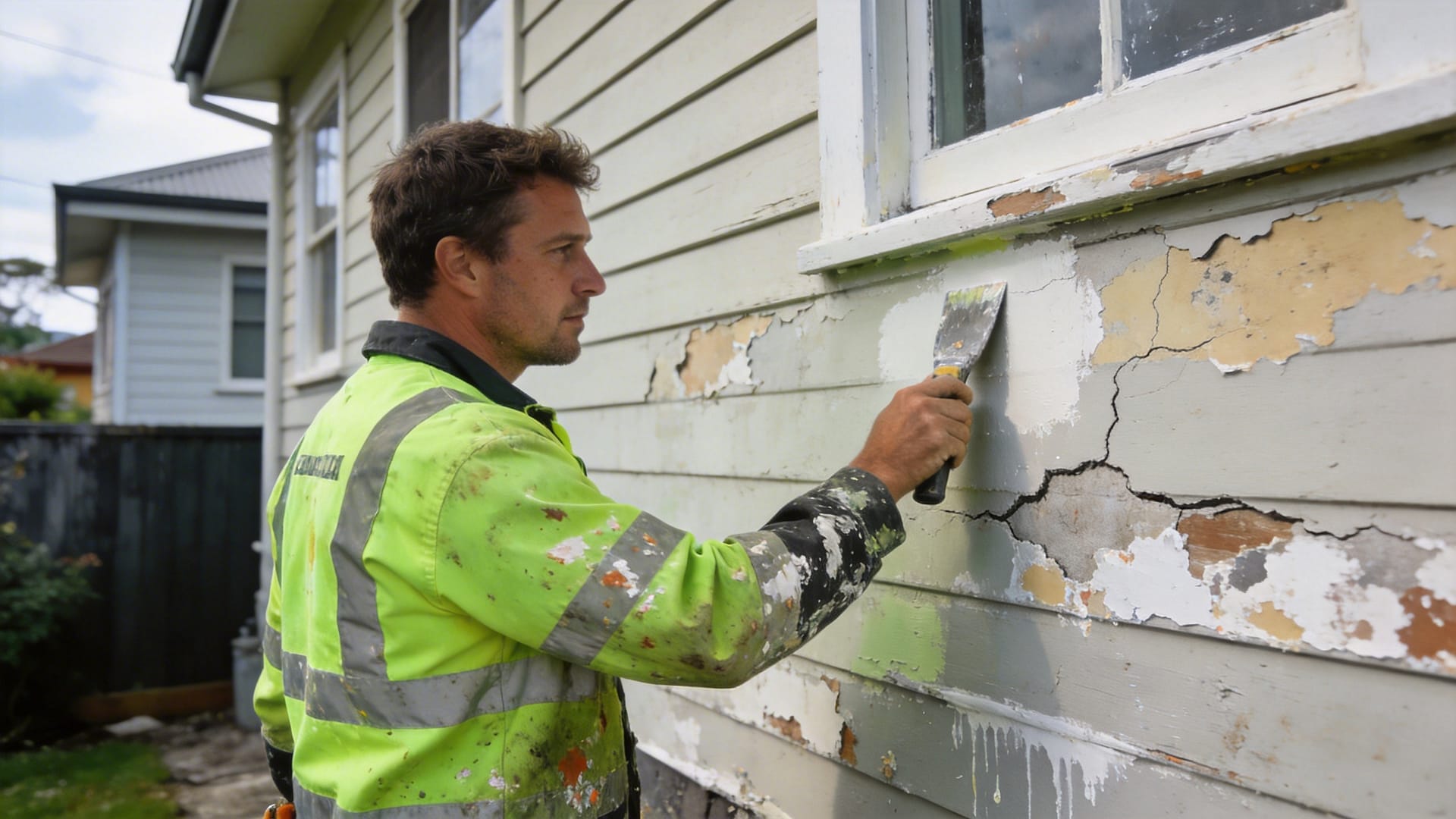
Run this 10-minute exterior paint check
Choose a dry day with good light. You do not need specialist equipment for this first screening check.
Stand back: compare colour and sheen across every elevation. Photograph the same wall from the same position so future change is easier to judge.
Move closer: inspect sills, trims, fascia, corners, laps, joints and the bottom edges of timber. These details often fail before broad wall areas.
Wipe one test area: note whether the mark is removable dirt or whether the paint itself leaves a persistent powdery residue.
Look for a cause: where paint is bubbling or stained, check for failed sealant, overflowing gutters, leaking joins, vegetation contact or another source of moisture.
Record the scope: identify whether the problem is one isolated detail, one full elevation or multiple faces. That distinction changes the repaint decision and the likely cost.
Wash before making a cosmetic judgement. New Zealand paint-maintenance guidance recommends annual exterior washing, with particular attention to salt, mould, bird droppings and areas sheltered from normal rainwashing. Cleaning can restore a sound coating; it cannot restore adhesion to a failed one.
What shortens the repaint cycle in New Zealand?
Exposure that attacks the coating
- North- and west-facing elevations: often receive more sustained or intense sun.
- Coastal salt: deposits accumulate on exposed faces and in sheltered areas that rain does not rinse.
- Wind-driven rain: repeatedly wets vulnerable joins, edges and imperfect repairs.
- Shade and slow drying: support mould and lichen, especially where vegetation limits airflow.
- Sloping or horizontal details: receive greater UV exposure and can hold water longer than vertical walls.
Choices that affect service life
- Previous preparation: new paint is only as secure as the cleaned, sound coating or substrate beneath it.
- Coating system: primer, number of coats and compatibility with the surface all matter.
- Colour: darker surfaces can absorb more heat and increase substrate movement.
- Detail repairs: failed putty, sealant, fixings and timber defects can undermine an otherwise sound finish.
- Cleaning and inspections: small failures caught early are easier to isolate and repair.
This is why two houses painted in the same month can reach the repaint stage years apart—and why one elevation on the same house may fail before the others.
Should you repaint one side or the whole house?
Partial repainting can be sensible when exposure is genuinely localised. The key question is whether the remaining elevations are sound enough to justify a separate mobilisation later.
| Choose a partial repaint when… | Choose a full exterior repaint when… | Check before deciding |
|---|---|---|
| One elevation or detail has clearly higher exposure and the rest of the coating is firmly bonded. | Fading, chalking, cracking or lifting appears across several elevations. | Whether the existing colour and sheen can be matched closely enough. |
| Damage is linked to a repaired local event, such as a failed joint or gutter issue. | The system is near the end of its expected maintenance window throughout. | Whether access, scaffolding and setup costs would be repeated soon. |
| Budget requires staging and each completed elevation can end at a natural architectural break. | Preparation needs are similar across the house and one coordinated job is more practical. | Whether hidden timber, rust or sealant repairs will expand the scope. |
Painting does not cure a building defect. If paint repeatedly bubbles in the same place, timber stays soft, cracks keep reopening or staining follows rain, identify and repair the cause before recoating. A fresh film may hide the symptom briefly while the underlying problem continues.
When is the best time of year to repaint in NZ?
The best time is a stable weather window that meets the coating manufacturer’s application requirements—not automatically the hottest week of summer. Spring, summer and early autumn often offer useful exterior painting windows, but local wind, humidity, overnight dew, shade, surface temperature and rain risk matter more than the month printed on the calendar.
Before work starts
- Allow time for washing and the substrate to dry.
- Check the forecast for preparation, priming, coating and early cure—not only paint day.
- Follow the product data sheet for temperature, moisture and recoat limits.
Do not wait for a “perfect season” if…
- bare timber or metal is already exposed;
- lifting paint is allowing water behind edges;
- failed joints or sealants are creating moisture paths.
Important safety check for older NZ homes
If the building was constructed in the 1980s or earlier, WorkSafe advises presuming that lead-based paint may be present. Removing or aggressively sanding old coatings can create hazardous dust and chips. Identify the risk and use the appropriate containment, protective equipment and work method before surface preparation begins. If older fibre-cement cladding may contain asbestos, do not sand, drill or otherwise disturb it until you have obtained appropriate advice.
See WorkSafe guidance on managing lead-based paint and asbestos information for homeowners.
Budget for the condition—not only the square metres
Two houses of similar size can have very different repaint costs. Access, height, scaffolding, peeling, timber repairs, sealant replacement, lead-safe preparation, colour changes and the number of coating systems can matter as much as wall area. Before requesting quotes, photograph every elevation and capture close-ups of the worst defects so the likely preparation scope is visible.
Start with the average cost to paint a house exterior in NZ, then review the factors that change the price to repaint a house in NZ. These guides help you separate a basic maintenance repaint from a repair-heavy project.
Estimate the repaint before you request quotes
Use your house size, storeys, condition and access to build a planning range. Treat the result as a budgeting estimate; the final scope still depends on an on-site assessment of preparation and repairs.
Frequently asked questions
How often should you repaint a house exterior in New Zealand?
A quality three-coat acrylic system on timber weatherboards may perform for around 7–10 years, while acrylic on more exposed sills and sloping surfaces may be closer to 5–7 years. These are planning benchmarks. Exposure, preparation, substrate condition and maintenance can shorten or extend the interval.
Should I repaint as soon as the colour fades?
Not always. Fading can appear before the coating loses adhesion, but it is a useful signal to inspect more closely and start planning. If fading is accompanied by chalking, cracking, lifting edges or exposed material, the case for repainting is stronger.
Can a dirty or mouldy house just be washed?
Yes, if the coating beneath is sound. Wash and reassess. If growth returns quickly, the paint remains stained or the film is rough, cracked or poorly bonded, investigate the coating and moisture conditions rather than repeatedly cleaning the symptom.
Can I repaint only the north- or west-facing side?
Yes, when wear is limited to one elevation and the rest of the coating is in good condition. Consider colour matching, natural stopping points and whether access costs will have to be paid again when the remaining elevations are repainted.
Can I paint over chalking or peeling paint?
New paint needs a clean, sound and compatible base. Loose coating, persistent chalk, failed sealant, mould and damaged substrate require the correct preparation first. Painting directly over a weak surface can transfer the failure into the new system.
Does the 7–10 year figure apply to every exterior surface?
No. It specifically reflects a quality three-coat acrylic system on timber weatherboards in New Zealand guidance. Sills, sloping surfaces, metal, stains, coastal exposures and unknown older systems have different maintenance needs.
Do interior walls need repainting on the same schedule?
No. Exterior timing is driven heavily by weather protection. Interior repainting is usually driven by wear, staining, moisture problems, washability and appearance. A sound low-traffic room can remain serviceable much longer than a busy hallway, kitchen or bathroom.
The practical answer
So, when should you repaint your house in NZ? Start inspecting before the expected maintenance window, then repaint when the coating is losing protective performance but before failure becomes widespread. For many acrylic-painted timber weatherboard homes, 7–10 years is a useful review range. For exposed details, metal, stains, coastal sites or weak previous work, the decision may come sooner.
If you remember only one rule, use this one: age tells you when to look; condition tells you when to act.
NZ sources used for this guide
- Resene: Maintaining exterior painted surfaces — maintenance intervals, annual washing, exposure and preparation.
- Building Performance (MBIE): Painting and decorating — surface, climate, durability and exterior stain guidance.
- WorkSafe New Zealand: Managing lead-based paint — precautions for buildings from the 1980s or earlier.