New Zealand exterior repainting guide
What Happens If You Don’t Repaint Your House?
The first consequence may be a tired-looking finish. The expensive change happens when the coating loses its grip or leaves the surface exposed: your next job can include paint removal, timber or cladding repairs, and more time on scaffolding before repainting can begin.
Fading alone does not prove that your house needs an immediate full repaint. Peeling, bare patches, failed joints and persistent dampness need closer attention. The decision is whether the existing surface is still protected, what has caused any failure, and how much of the house actually needs work.
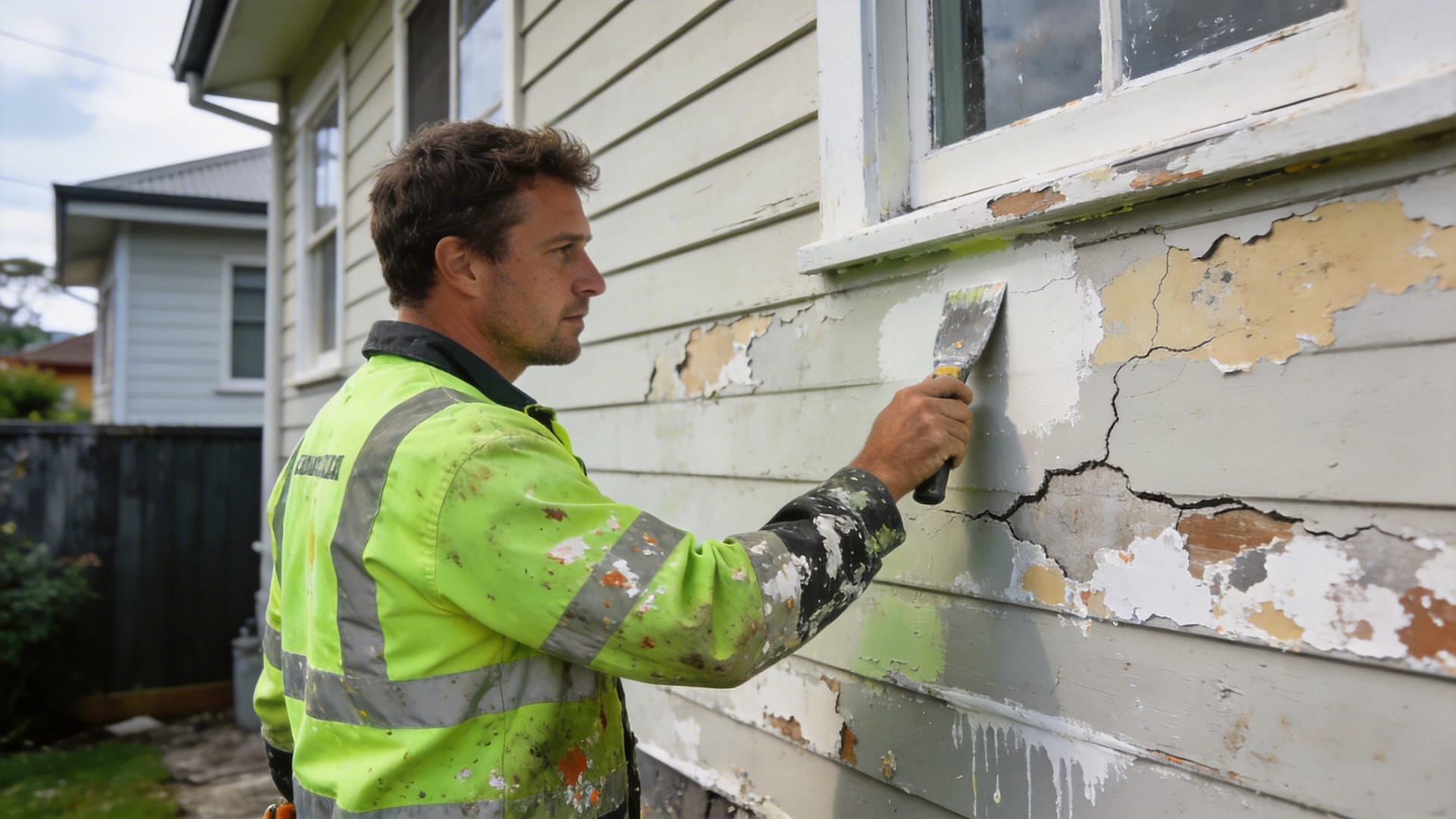
What actually happens when exterior repainting is left too long?
Paint helps protect the material beneath it, but its performance depends on a sound base and a maintained coating system. The consequences of neglect change when deterioration moves beyond the finish itself.
1. Colour fades and the surface weathers
The house can look patchy, dull or chalky. This is a reason to inspect the finish, not proof of rot. The key question is whether the change is superficial or the paint film is wearing away and losing continuity.
2. Loose paint leaves a weaker base
Cracking and peeling can spread beyond a small original defect. More unsound coating then needs removal before a new system can bond. An extra topcoat cannot anchor a layer that is already separating underneath.
3. Bare boards and sills deteriorate
Unprotected patches receive direct weather exposure. Timber can become rough, split or move as its moisture content changes. Decay becomes a concern where moisture persists; a bare patch does not automatically mean the whole board is rotten.
4. Other surfaces lose protection too
Painted steel can corrode where its protective system is breached. Render, fibre cement and coated masonry have different repair requirements. A coating defect may need more than ordinary decorative paint to put it right.
5. Water-entry problems keep working
A defective joint, flashing or cladding detail can allow wetting to continue. Painting the visible damage may conceal the pattern while the source remains. Repeated failure in the same place deserves investigation.
6. A repaint becomes a repair project
The scope can expand to replacement materials, another trade, drying time and extended access hire. These are different costs from buying more paint. Once repairs are involved, the original simple repaint allowance may no longer describe the work.
There is no fixed sequence that every house follows. Poor adhesion can cause peeling before obvious fading. Water can enter behind an otherwise presentable wall. Use the visible pattern and the condition of the material to decide what needs investigating.
How the job can change as deterioration spreads
These are possible scopes, not a forecast of what will happen after a set number of months.
Read the pattern before deciding that you “just need paint”
A faded wall, a peeling sill and blisters beneath a window are different clues. Start with where the problem is, whether it keeps returning and what material is exposed.
| What you can see | What it may suggest | Check before choosing the scope | Priority |
|---|---|---|---|
| Colour fade without cracks or lifting | Cosmetic ageing while the coating may still be attached. | Inspect edges, sills and sheltered areas; do not judge from the street alone. | Monitor |
| Powdery residue across the finish | Chalking and erosion of the coating surface. | Establish how much sound coating remains after appropriate cleaning. | Plan work |
| Peeling concentrated on one exposed face | Exposure-related deterioration, poor preparation or a weak previous layer. | Assess adhesion beyond the obvious patch and compare the other elevations. | Assess soon |
| Blisters or peeling return below a window | A local moisture or detailing problem rather than age alone. | Note any rain pattern; investigate the sill, joints, flashing and concealed wetting as appropriate. | Find cause |
| Bare timber, exposed edges or rust | The intended protection is no longer continuous at that point. | Confirm material condition and the preparation or repair needed before coating. | Act promptly |
| Cracks through cladding or opening joints | Movement or a defect in the building or cladding system. | Identify the system and repair requirement; ordinary filler and paint may be unsuitable. | Assess detail |
| Softness, swelling, decay or indoor water marks | A material or moisture problem extending beyond the coating. | Arrange assessment of the source and extent before accepting a repaint-only solution. | Investigate |
For help recognising individual symptoms, use the companion guide to signs your house needs repainting. Here, the next question is what those symptoms mean for delaying the work.
Peeling is evidence of a failed coating, not a complete diagnosis. Resene lists several causes of cracking and flaking, including ageing and preparation issues. The repair must address the cause as well as the loose paint. Read the coating-failure reference.
Do you need a local repair, a full repaint or an investigation first?
Use the worst condition you can see. The checker combines the symptom, its spread and the surface involved to suggest what to discuss with a contractor. It cannot inspect hidden materials or clear a house as safe to leave untreated.
The warning-sign table above and the repair options below provide the same planning framework if the interactive checker is unavailable.
Start with the condition, not the paint’s age
Select the symptom, spread and material. A small defect may need targeted work; moisture or damaged material changes the priority even when the affected patch is small.
The size of the repaint and the urgency of the repair are separate decisions. A small leaking detail can need prompt investigation. A whole house with sound but faded paint may allow a planned repaint. A single damaged area does not, by itself, establish that every wall needs coating.
Can you leave it another year—or wait until summer?
An extra year is a period of further exposure, not a neutral pause. Whether it is reasonable depends on what remains sound and what you do about defects in the meantime.
There may be time to plan when…
- The change is mainly colour or sheen.
- The coating remains attached and continuous, including vulnerable details.
- There are no known bare areas, opening joints or recurring moisture signs.
- You will maintain the finish and review changes instead of leaving it unchecked.
Get defects assessed before deferring when…
- Timber or other material is exposed.
- Peeling or blisters are spreading or returning after repairs.
- Cracks involve the cladding, a window junction or another weatherproofing detail.
- Timber is soft or swollen, corrosion is advancing, or damp marks appear indoors.
If the full repaint is booked for summer, ask what protection or repair is needed now. The answer may be targeted work to a vulnerable area, or it may be investigation before any coating is applied. Do not assume that exposed primer can serve as the finished weather surface for the whole waiting period.
Equally, urgency does not make unsuitable painting conditions acceptable. Any interim coating still needs the preparation, surface dryness, temperature and weather window required by its specification. Where water is entering, the immediate task is stopping that entry.
A useful question for the contractor: “If we postpone the full repaint, which specific areas need work now, what will that work achieve, and what changes should trigger an earlier return?” A written answer is more useful than a general reassurance that the house will be fine.
Why a NZ house rarely ages evenly on every side
The last repaint date describes the project, not the condition of each elevation. Sun, wetting, shelter and the shape of the building create different maintenance needs.
Exposed elevations
North- and west-facing walls often receive substantial sun, depending on shading. Compare their coating condition with sheltered faces. Dark finishes can add heat loading; any colour restrictions for the cladding still apply.
Slow-drying areas
Look near dense planting, splash zones, leaking gutters and other recurring sources of wetting. A damp sheltered area can have different problems from a sun-exposed wall with the same paint age.
Salt under shelter
Coastal air can deposit salts where rain does not regularly wash the surface. Under eaves and canopies, deliberate maintenance matters even when the area seems protected from the weather.
Use service-life figures as planning references. Resene gives about 7–10 years for a quality three-coat acrylic system on timber weatherboards, with earlier maintenance on more exposed sloping surfaces. Its guidance also calls for annual inspection and running repairs in harsh exposure. Those figures do not justify waiting when paint is already failing. See the system-specific guidance.
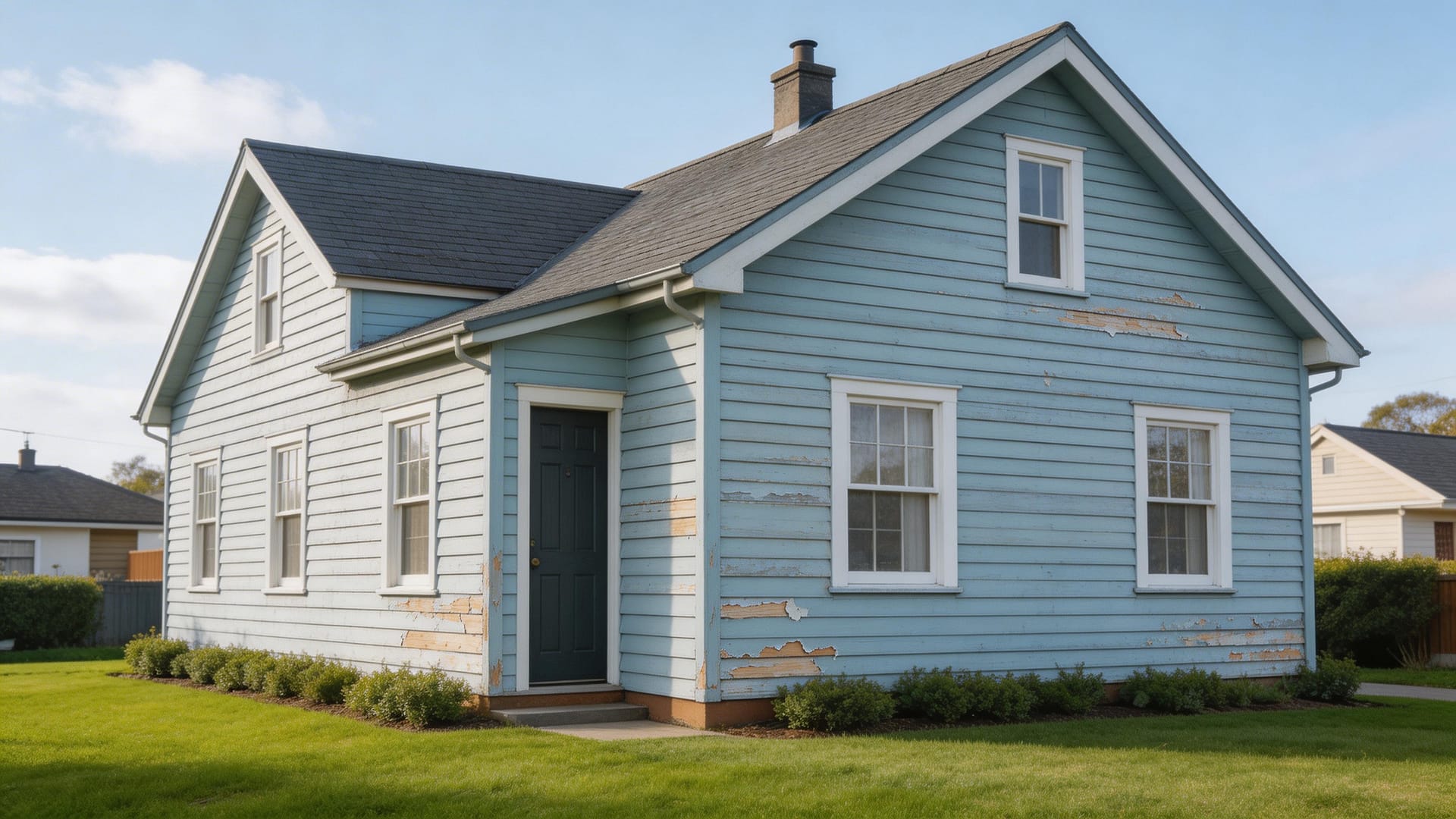
What changes with timber, fibre cement, plaster or metal?
The material determines what the coating protects and how a defect should be repaired. Identify the actual system before choosing a generic “exterior repaint”.
| Surface | What delay can expose | What a proper scope should establish |
|---|---|---|
| Timber weatherboards, fascia and sills | Weathered wood, vulnerable end grain, movement and decay where dampness persists. | Whether the timber is sound, which pieces require repair or replacement, and how bare areas will be prepared and coated. |
| Painted fibre cement | Failed coatings at faces, edges, fixings or joints; moisture concerns depend on the installed system. | Board condition, joint details and the manufacturer’s coating instructions. Identify older materials before abrasive preparation. |
| Plaster, render or EIFS | Deteriorated protective coatings and cracks or junctions requiring system-specific repair. | Whether cracks are within the coating or the substrate, whether water is entering, and the required repair and coating system. |
| Painted steel and metal details | Corrosion where protective layers are damaged, including edges and fixings. | Whether corrosion is a surface-preparation issue or the metal itself needs repair; the specified corrosion-control system. |
| Coated concrete block or masonry | Loss of a coating that may be important to water resistance, plus cracks or recurring salt deposits. | The role of the existing coating, the cause of moisture or salts, and compatibility of the replacement system. |
Paint is not merely decorative on every masonry house. MBIE notes that most solid concrete-block homes rely on an external waterproof coating for weathertightness. That is different from unpainted brick veneer. Identify what you have before treating a coating failure as cosmetic. See MBIE’s wall-maintenance guidance.
Some brick, stained timber and factory-finished claddings need a different maintenance programme. Do not paint over an unfamiliar finish or fill openings indiscriminately. First establish the intended coating, joint and drainage details.
Already peeling or exposing timber? Repair it in this order
A durable repaint starts with the cause and the material. Use this sequence to discuss the work with your contractor and understand what should happen before the finishing coats.
- Map the failures and assess the cause
Record which elevations and details are affected. Check whether the failure is widespread, confined to old repairs or associated with water entry. An adhesion assessment should establish whether apparently intact neighbouring paint is a reliable base.
- Identify preparation hazards and access needs
Before disturbing old coatings or boards, establish whether lead paint or asbestos-containing material may be present. Agree on suitable preparation, containment and access. A short reach from a ladder is not a substitute for a safe work setup.
- Repair the source and any damaged material
Correct the relevant leak, joint or other defect. Decide whether timber, cladding or metal can be repaired or needs replacement. The painting scope should identify who does this work and what is excluded.
- Establish a clean, stable, suitably dry base
Remove unsound coating using methods appropriate to the material and identified hazards. Deal with contamination and damaged surfaces, and verify suitability for the specified system. Cleaning, removal and repairs may need to be repeated or sequenced differently on different substrates.
- Prime, fill and seal as the system requires
Use products compatible with the existing finish and exposed material. The specification should identify which areas need primer and which joints are intended to be sealed. Ordinary filler is not a universal solution for moving cracks or failed construction details.
- Apply the complete exterior coating system
Follow the required coats, coverage, recoat intervals and application conditions. Agree where the new finish will stop so repaired areas have appropriate protection and an acceptable colour and sheen match.
- Check the work and record future maintenance
Keep the product names, colour, repaired locations and completion photos. Inspect areas with a moisture history after relevant wet weather, and follow the manufacturer’s maintenance programme.

Older-house preparation needs specific care. WorkSafe advises presuming that buildings from the 1980s or earlier have been painted with lead-based paint. Older building materials may also contain asbestos. Identify the hazards before sanding, scraping or cutting; do not disturb a suspect material to find out what it is. Lead-paint guidance · Asbestos guidance.
Where does the extra cost of delaying a repaint come from?
The critical difference is often the work beneath the finish. Two similar-sized houses can need very different budgets when one has sound paint and the other needs extensive removal or building repairs.
| Cost item | With a sound existing surface | After more extensive failure |
|---|---|---|
| Paint removal and preparation | Preparation for a largely intact coating. | More unsound paint to remove, more transitions to prepare and a larger area of exposed substrate. |
| Material repairs | Defined minor defects, if any. | Possible timber, cladding, joint or metal repairs before the painter can complete the finish. |
| Access and hire | Equipment planned around the painting programme. | Repairs can extend scaffold hire or require additional setup and return visits. |
| Project coordination | A more clearly defined painting sequence. | Another trade, replacement materials or drying may need to fit between preparation and repainting. |
| Uncertainty | More work identifiable at the initial inspection. | Concealed defects discovered during preparation may require separately approved variations. |
The meaningful cost comparison is the scope, not an annual penalty. There is no reliable percentage by which every delayed repaint becomes more expensive. Ask what extra preparation, repairs and access are now required, and how those items have been priced.
Three situations that look similar from the footpath
These are illustrative planning examples, not completed client projects or price quotations.
Faded walls, sound details
Finding: The finish looks tired, but closer inspection finds a continuous, attached coating.
Likely discussion: Cleaning, maintenance and the timing of a planned repaint.
Cost question: Is a full repaint being proposed for protection, appearance, or both?
Peeling on one elevation
Finding: One exposed wall has failed areas; the timber appears repairable and the other sides need assessment.
Likely discussion: An elevation repaint with properly scoped preparation.
Cost question: Does staging the work save money now but repeat access costs later?
Peeling beside a soft sill
Finding: Paint failure is accompanied by damaged timber or recurring wetness.
Likely discussion: Investigation and material repairs before coating.
Cost question: Are the building repairs included, separately priced or currently unknown?
For general NZ painting price context, see how much it costs to paint a house in NZ. Compare any figures against the actual surfaces, preparation standard, access and repair exclusions for your home.
Build the painting budget once the repair scope is clear
The calculator helps plan the coating work. Hidden decay, leak repairs and specialist remediation still need assessment and their own allowance where applicable.
If money is tight, what should you fix first?
Separate necessary repairs from the scale of the decorative finish. Ask for options that address known defects while making the remaining repaint manageable.
A practical order for the budget
- Investigate active water entry or damaged material. Establish the repair before spending on a cosmetic cover-up.
- Restore protection at known failed areas. Confirm that targeted work is appropriate and what it includes.
- Plan the most affected elevations. Check the remaining sides before assuming they can wait.
- Schedule the wider finish. Compare colour consistency, access and repeated setup costs.
Shortcuts that can leave the bill unresolved
- Repainting the most visible front wall while a known leaking detail remains elsewhere.
- Covering loose paint with a more expensive topcoat.
- Leaving bare areas untreated because the whole project is not affordable yet.
- Agreeing to “minor repairs included” without defining which defects that covers.
Ask for two scopes when staging is realistic: the work needed now, and the complete repaint. Each should identify surfaces, preparation, repairs, coatings and access. A cheaper first stage is useful only if you understand what it leaves for later.
What to check and send before requesting a quote
A useful inspection brief shows the extent and pattern of the problem. Keep your initial check at ground level and visual; leave inaccessible or suspect materials undisturbed.
Collect these details
- A wide photo of every elevation, with access visible.
- A close-up and location photo for each concern.
- The cladding type and last repaint date, if known.
- Whether defects return after rain or previous repairs.
- Indoor marks or dampness near the exterior failure.
- Narrow paths, slopes, upper levels and other access constraints.
Ask the contractor to explain
- What has failed: paint, material, a building detail, or more than one?
- How far does unsound coating extend beyond the visible patches?
- Which repairs are included and who carries them out?
- Can any elevations remain in service while others are repainted?
- What conditions could change the price after preparation starts?
- How will extra work be documented and approved?
Choose the assessment for the problem. A painter can assess coating condition and preparation. Suspected decay, cladding defects or rain entry may need a builder or weathertightness professional; roof or plumbing defects need the relevant trade. Photos help organise that assessment but cannot rule out hidden damage.
What if you do not repaint the inside of the house?
In a dry room with sound paint, the consequences are usually scuffs, visible stains, an ageing colour scheme and a finish that becomes harder to clean. Those conditions often allow you to choose a repainting date around use and appearance.
Peeling beside a window, recurring mould, a water-stained ceiling or softened lining needs a different response. Find the moisture cause and establish whether the material remains sound before decorating. The same distinction applies inside and out: a worn finish can need maintenance; damaged or persistently wet material needs its own repair.
Frequently asked questions
Is faded exterior paint a sign that I must repaint now?
Not by itself. Check whether the coating remains continuous and firmly attached, particularly at sills, edges and exposed details. Fading with no other defects can allow time to plan. Peeling, bare areas or moisture signs change the decision.
How long can you leave peeling exterior paint?
There is no universal safe number of weeks or months. Assess why the coating has failed, what material is exposed and whether it remains sound. Arrange prompt attention for exposed areas, and investigate dampness or damage before setting a repaint-only scope.
What happens if a house has not been painted for 15 or 20 years?
Arrange a condition assessment rather than deciding from age alone. Some surfaces may remain serviceable while exposed details need substantial work. Identify the original finish, inspect every elevation and distinguish coating maintenance from repairs to the material beneath it.
Can I paint directly over peeling paint?
No. Loose coating is not a dependable base for a new finish. Identify the cause, remove unsound layers using an appropriate method and prepare the substrate for the specified system. A premium topcoat will not correct weak adhesion underneath.
Will exposed timber definitely rot?
No. Decay depends on factors including moisture conditions and the timber involved. Bare areas still need assessment because the intended protection is missing. Weathered wood may be repairable; softness, crumbling or persistent dampness warrants investigation of the material and the cause.
Can I repaint just one side of the house?
Sometimes. One elevation may need work before the others. Check the remaining coating, specify the preparation and repairs, and agree on finishing boundaries. Compare the staged cost with the full project because separate visits can repeat setup and access costs.
Can house washing delay the need to repaint?
Appropriate cleaning can maintain a sound finish and improve its appearance. It cannot replace missing paint, restore adhesion or repair a defective joint. Inspect after cleaning, follow the cladding instructions and avoid aggressive washing around damaged or suspect details.
Can I leave primer exposed until the full repaint?
Only if that use and exposure period are permitted by the product specification. Primer is not automatically a substitute for the finished exterior system. Ask what complete interim treatment is appropriate for the surface and the planned waiting period.
Does repainting fix a leaky house?
Ordinary repainting does not establish or repair the source of a leak. Water entry can involve roofs, flashings, joints, cladding and other details. Have the cause assessed and repaired, then restore the correct coating system where required.
Does every brick or concrete house need repainting?
No. Unpainted brick veneer, coated concrete block and proprietary cladding systems have different maintenance needs. Some rely on an external protective coating. Identify the system and its instructions before deciding that repainting is unnecessary or applying ordinary decorative paint.
Keep the next job as close to a repaint as possible
The useful time to act is when you can still address defects without letting the repair scope grow. Find out what is sound, investigate what is failing, and price the work that is actually needed. That gives you a practical basis for deciding whether to maintain, repair locally, repaint one elevation or plan the whole house.