New Zealand exterior repair guide
Solid Plaster Repair Cost NZ: Cracks, Patches & Repainting
Small exterior crack repairs can cost a few hundred dollars; broader plaster work can run into thousands. The useful question is how much it will cost to leave the wall repaired, protected and acceptably matched—not just filled.
Start by identifying the wall system and the cause of the damage. Then price the repair area, access and paint finish as separate parts of the same job.
Area-based plaster benchmark
$115–$207per m², including 15% GST
Three-coat mesh plaster system, using a published North Auckland labour-and-materials rate. Confirm access, substrate repairs and painting separately.
See the source and limits of this rateRequest a complete job price, including finishing and return visits. A tiny area calculation can be misleading.
An area allowance can help once the system, sound substrate and extent of work are confirmed.
Arrange an assessment before agreeing to cosmetic work. The repair boundary may change after investigation.
How much does solid plaster repair cost in NZ?
The price changes sharply between a local crack repair, a defined area of replastering and a wall affected by moisture. A useful published reference comes from Auckland contractor West & Sons: small repairs can be in the hundreds, medium work in the thousands, and moisture repairs can exceed NZ$10,000. That broad guide does not specify GST.
| Repair scope | Budget reference | What the figure tells you |
|---|---|---|
| Isolated minor exterior cracks | Hundreds of dollars Job price; confirm GST | Request the price for the whole repair visit and finish. Crack length alone does not capture setup, return visits or paint matching. |
| 5 m² of suitable three-coat mesh plaster work | $575–$1,035 | Calculated plaster allowance, including GST. Small-job charges may override the area calculation. |
| 10 m² of the same defined system | $1,150–$2,070 | Calculated plaster allowance, including GST. Check the separate price for the final paint finish. |
| 20 m² of the same defined system | $2,300–$4,140 | Calculated plaster allowance, including GST. Access and substrate condition still need pricing. |
| Moisture damage or wider cladding failure | Investigation-led quote | Price the cause, concealed damage and reinstatement. A surface repair rate cannot establish the full cost. |
Swipe sideways to read all columns.
Price basis: West & Sons publishes NZ$100–$180/m² excluding GST for a three-coat mesh plaster system in North Auckland and the Hibiscus Coast, including labour and materials. The area rows above multiply that rate by area and 1.15. They are calculations, not collected quotes or a national average.
Repair area and repaint area are different
A repaired strip may cover only a small part of a wall. To achieve a consistent colour, texture and sheen, the finishing work may extend to a corner, control joint or the whole elevation. Ask the contractor to mark both boundaries on a photo.
What is included in the per-m² allowance?
Use it for the specified plaster system only. The published rate does not itemise every possible extra. In the planner below, scaffolding, removal or rebuilding of damaged backing, moisture investigation and final painting are separate items until confirmed. If your contractor already includes one of these in a package, do not add it twice.
For a wider exterior project, compare the finishing scope with our guide to how much exterior house painting costs in Auckland. The repair allowance and the painting allowance should fit together without overlapping preparation charges.
Solid plaster, stucco and GIB repairs need different budgets
“Plaster repair” covers several trades. This guide focuses on exterior solid plaster, render and stucco repairs. A smooth-looking wall does not tell you what is underneath it.
Render over brick, block or concrete
The repair needs to bond to the masonry and suit the existing finish. Loose render, movement in the backing and the condition of old coatings affect the work.
Traditional stucco over backing and mesh
Damage may involve the plaster, its reinforcement or the backing. A surface patch and a repair through the cladding are different scopes.
A proprietary plaster cladding system
Plaster over sheet, panel or insulation systems needs a compatible repair specification. Identify the system before choosing a filler, mesh or coating.
Interior plaster or plasterboard
GIB stopping, holes in plasterboard and older interior plaster repairs use different methods. Do not apply the exterior mesh-system rate to a bedroom wall.
BRANZ explains the construction differences between stucco and proprietary exterior insulation and finish systems. Older lime-based or heritage plaster also needs a specialist assessment of material compatibility.
If the damage is indoors, have the wall repair priced first, then use the Interior Painting Cost Calculator for the separate repainting budget. That tool estimates painting; it cannot identify or price hidden wall damage.
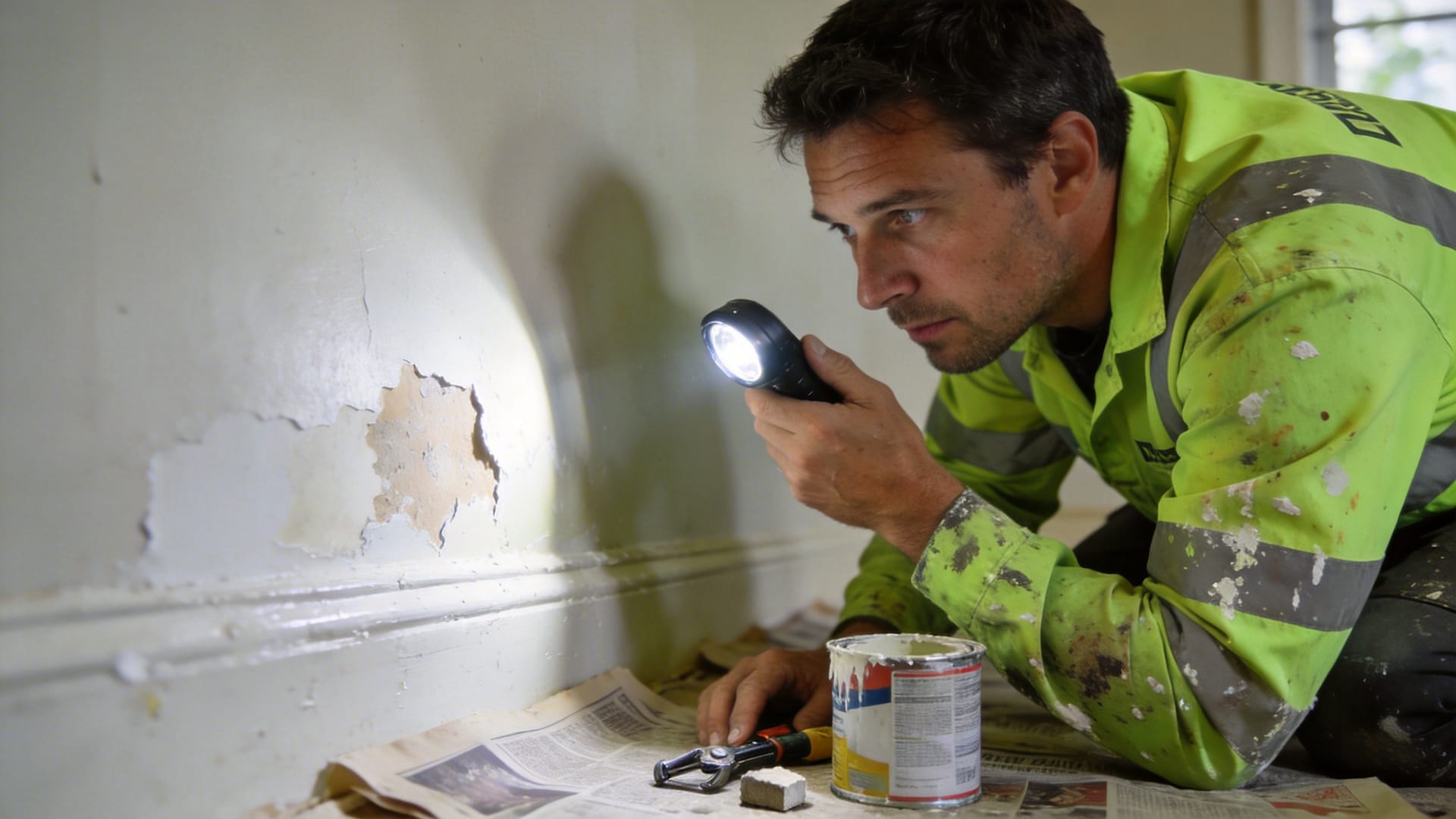
Can it be patched, or should the wall be investigated first?
A crack's width helps describe the damage, but it does not establish the cause. Its location, whether it is changing, the surrounding bond and any moisture symptoms are just as useful when setting the repair scope.
| What you notice | Practical next step | Effect on the budget |
|---|---|---|
| One fine crack; nearby plaster appears firmly bonded; no known dampness or change | Ask an exterior plaster specialist whether local treatment suits the system. A fine crack still deserves inspection. | May remain a local repair with a defined finish allowance. |
| The same crack reopens after filling, or several cracks appear across one wall | Review movement, joints and the backing before choosing a repair method. | May require a larger reinforced repair or additional building work. |
| Bulging, loose or hollow-sounding areas | Have the extent of poor adhesion checked. Keep clear of loose material that could fall. | The removal and reinstatement area may exceed the visible defect. |
| Staining, dampness, bubbling, a musty smell or rain-related interior symptoms | Investigate the moisture source before sealing and repainting. | Allow for assessment and any necessary opening-up; price repairs after the findings. |
| Cracks around joinery, a deck junction, roof junction or a penetration | Check the junction detail as well as the plaster surface. | Flashing, sealant or other detail repairs may be separate trades and costs. |
| A crack is widening, displaced or accompanied by movement elsewhere | Arrange an appropriately qualified building assessment; engineering advice may be needed. | A cosmetic repair price is premature. |
Swipe sideways to compare the signs and next steps.
In its stucco and render painting guidance, Resene directs cracks over 1 mm to a solid plasterer. That is a repair-routing guideline, not proof that a narrower crack is harmless or a wider crack is structural.
Fresh paint cannot confirm that a wall is weathertight
A coating can improve the surface while a defective junction or concealed damage remains. MBIE notes that many weathertightness problems are not obvious. A visual check or one reassuring moisture reading should not be treated as a guarantee about the entire wall.
Solid plaster repair budget planner
Check whether an area allowance fits your job, then add the extras you have actually priced. The planner uses the regional benchmark above. It does not diagnose damage or substitute a square-metre rate for a specialist repair quote.
- Plaster system allowance, incl. GST
- Separately entered allowances, incl. GST
How to read the result: an unpriced item remains unpriced; the tool never silently treats it as free. Even with every box completed, the result is a working allowance based on your inputs, not a contractor's offer.
What makes a plaster repair quote more expensive?
The extra cost usually becomes clearer when you ask what must happen before and after the new plaster is applied. Have the contractor separate these items so you can compare equivalent work.
1. More removal than expected
A visible chip is not necessarily the edge of the failed material. Ask how the contractor will identify sound edges, and how extra removal will be measured and approved.
2. Access and return visits
A short repair above a roof or beside a steep driveway may need substantial access equipment. Ask whether scaffold hire covers the curing and painting period as well as plastering.
3. Matching an existing texture
Flatness, aggregate size, tool marks and the edge of a patch affect visibility. Agree on a sample or a realistic finish standard for a prominent wall before the full repair starts.
4. Painting a larger surface
New paint on a repaired patch can differ from weathered paint nearby. Ask for separate options for local touch-up and repainting to a natural break, with their likely appearance explained.
5. A problem outside the plaster
Failed joinery details, roof junctions or movement may require another trade. A plasterer's surface-repair price should not be assumed to include those jobs.
6. Unclear tax and exclusions
Put quotes on the same GST basis. A NZ$2,000 ex-GST quote becomes NZ$2,300 including GST; it is not directly comparable with an inclusive price of NZ$2,200.
Will the repair still show after painting?
It can. Repainting a whole wall helps with colour and sheen, but paint does not flatten a raised patch or reproduce an old roughcast texture. Separate surface matching from paint matching in the quote. Ask how the repair will look from normal viewing positions and in the side light the wall receives.
If the repair leads to a wider exterior repaint, our plaster house painting cost guide helps you consider the coating work alongside the repair. Confirm who owns preparation, sealing and final sign-off when different trades are involved.
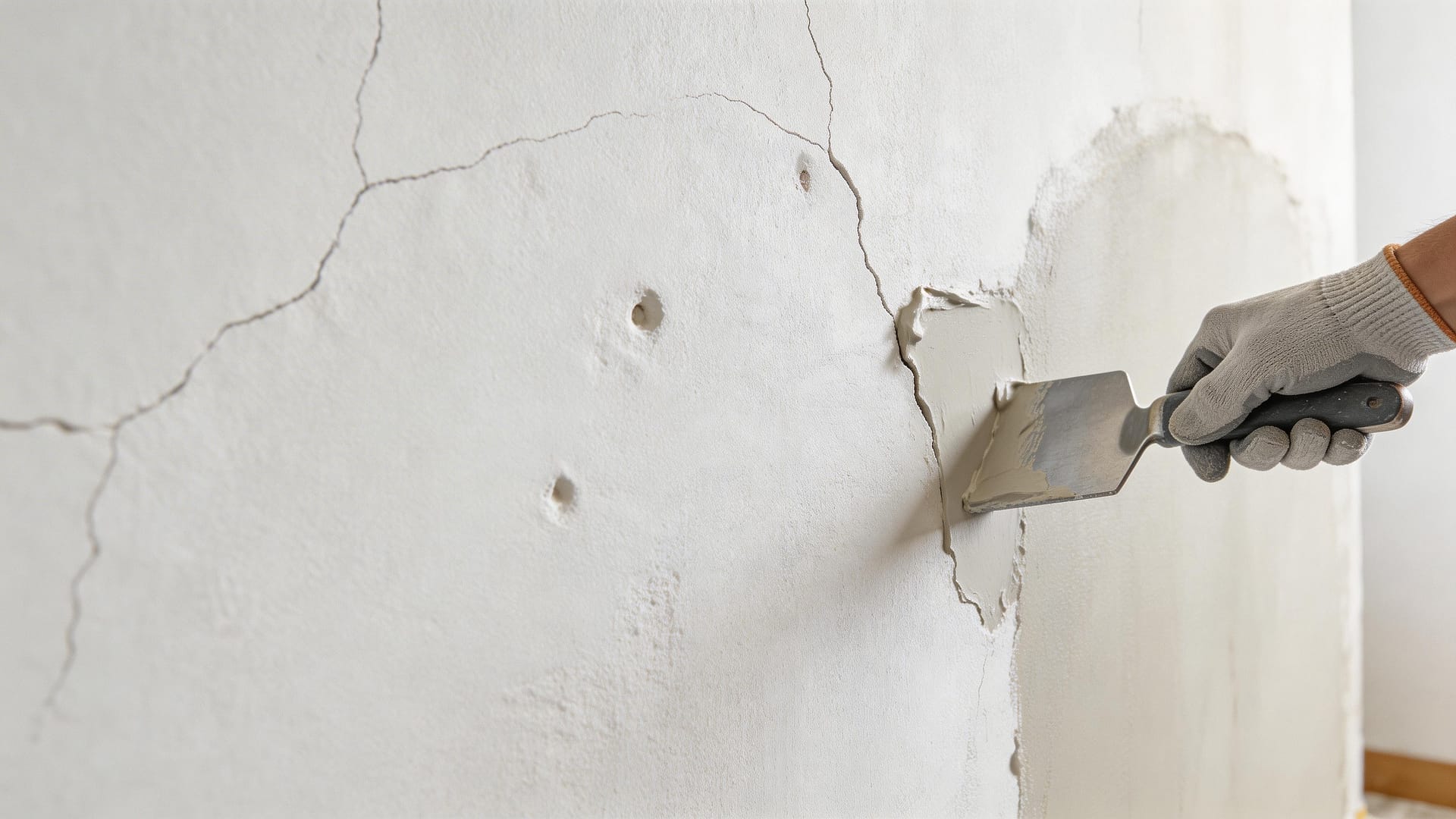
Three repair scenarios: where the money goes
These are worked planning examples, not completed customer jobs. The extra allowances are deliberately stated as assumptions so you can replace them with your own quotes.
Scenario 01 · One accessible crack
A short crack in otherwise sound exterior plaster
The contractor confirms a local repair is suitable. Request a complete price for preparation, repair, finishing and any return visit, plus the intended painting boundary. Measuring only the narrow strip to be filled would miss most of that work.
Useful comparison: a patch-only quote and a repair-plus-repaint quote are different purchases. Ask each contractor for the same finished result before choosing between them.
Scenario 02 · A defined 10 m² treatment area
Plaster work plus a separately priced paint finish
Assume the published system is suitable, the backing has been assessed and no scaffold or separate removal charge is required. Add an illustrative NZ$800 incl. GST paint allowance.
Plaster $1,150–$2,070 + assumed painting $800 = $1,950–$2,870 incl. GST
What changes it: if painting is already part of the plaster package, remove the extra. If preparation or access is still unpriced, this is a partial allowance.
Scenario 03 · Damage beside a window
A small visible area with dampness after rain
A square-metre calculation cannot tell you whether the opening, backing or framing needs work. Agree on the assessment and any opening-up first, including how exposed areas will be protected. Ask for photographs and a revised scope before reinstatement.
Budget in stages: investigation → confirmed remedial work → plaster reinstatement → final coating. An unexplained percentage contingency cannot replace the missing diagnosis.
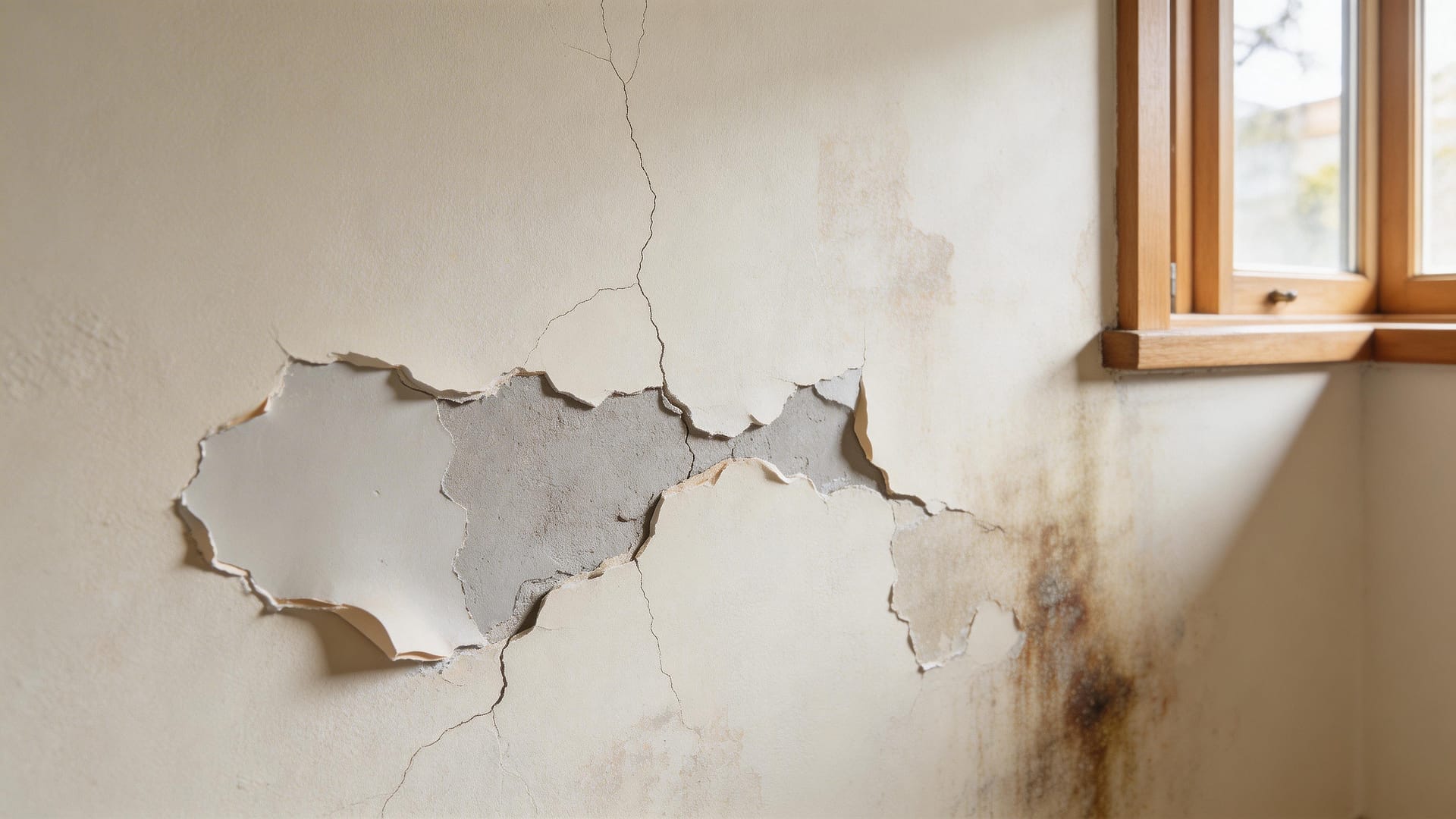
What should the repair process include?
A good scope explains the sequence and the conditions needed before the next stage. The exact repair products and details should follow the identified wall system.
- Identify the system and document the defect.Record the repair location, surrounding condition, previous repairs and any moisture or movement findings. Establish whether further investigation is needed.
- Agree on the repair boundary and access.Mark the area to remove or treat, the finishing boundary and any exclusions. Resolve necessary underlying building repairs before covering the affected area.
- Prepare a sound base.Remove unsound material as specified, address contamination and prepare the substrate for adhesion. Ask what happens if the opened area reveals additional damage.
- Reinstate the specified repair system.The method may involve local crack treatment or layered repair with reinforcement and retexturing. Mesh is not a substitute for resolving the cause of movement.
- Allow the required curing and drying.Check the product specification, repair thickness and site conditions before applying the next material. Touch-dry is not the same as ready to overcoat.
- Complete and inspect the coating.Apply the specified sealer or primer where required and the agreed finish coats. Check the appearance, junctions, clean-up and maintenance instructions.
Resene Construction Systems' RMaxx repair specification distinguishes local crack treatment from wider re-meshing and requires the cause of extensive problems to be investigated. Its details apply to that system, rather than every plaster-clad wall.
How long before repaired plaster can be painted?
There is no single waiting time for all repairs. Resene's cementitious-surface guidance notes that concrete and thickly applied plaster can need up to 28 days to cure, with specified early-coating systems as exceptions. Thin repairs and proprietary products have their own instructions.
Ask for the product names and the expected gaps between visits. Confirm whether rain, cool conditions or a shaded wall could delay the next stage, and whether access hire remains covered if the programme extends.
How to compare two solid plaster repair quotes
Give each contractor the same photos and requested finish, then check the following eight items. The most useful quote is specific enough that you can recognise what you are paying for.
- Wall system and causeWhat is being repaired, and what findings support the proposed method?
- Measured work areaWhich cracks, patches, walls or elevations are included? What is the removal boundary?
- Repair specificationWhich products, reinforcement, texture and junction treatments are allowed for?
- Paint finishIs it spot painting, a full wall or a complete elevation? Are primer and finish coats specified?
- Access and durationWho provides access equipment, and are return visits and weather delays addressed?
- Tax and exclusionsIs GST included? Which investigation, backing, framing or other-trade work is excluded?
- Additional workHow will unexpected defects be documented, priced and approved before work continues?
- Completion and follow-upWhat appearance is agreed, what records will you receive, and what does the stated warranty cover?
Our guide to getting an accurate painting quote in New Zealand helps you specify the coating part so it is not left as an undefined “paint to match”.
What photos should you send for an initial estimate?
Send one view of the whole wall, a close-up with a ruler for scale, and an access view showing the ground, roof or deck below it. Add a photo of the corresponding indoor area if there are symptoms. Include when the problem appeared, whether it changes after rain and any previous repair history. Photograph from safe ground; a remote estimate can still need a site visit.
A useful message to send with your photos:
“Please identify the likely wall system and whether the damage needs investigation before repair. Show the proposed repair area and repainting boundary. Please separate plaster work, access, final coating and any excluded work, state whether GST is included, and explain how additional damage would be priced.”
Does solid plaster repair need building consent?
Some maintenance and comparable-material repairs may be exempt. MBIE gives an example of damaged solid plaster cladding being replaced and repainted where the damage was not a durability failure. Its general exemption excludes certain repairs to components that have failed Building Code durability requirements, including through external moisture failure. Check MBIE's repair and maintenance guidance and confirm the route with your council when the scope is uncertain.
Can you save money by repairing plaster yourself?
A very small, confirmed cosmetic defect on an accessible wall may be suitable for DIY with system-compatible materials and instructions. The difficult part is recognising when it is genuinely cosmetic and matching the finish after repair.
Arrange specialist help when the system is unknown, the plaster is loose, the crack returns or the wall shows moisture symptoms. Avoid cutting, drilling or sanding unidentified older backing and coatings until their materials and the appropriate controls have been established.
Practical ways to keep a professional repair affordable
- Group confirmed local repairs into one visit sequence.Ask whether several known defects can share setup, access and finishing work.
- Coordinate with a planned repaint.Have both trades agree on responsibilities so cleaning, access and paint preparation are not charged twice.
- Choose the finishing boundary before work begins.Compare the price and likely appearance of local finishing against a full-wall finish.
- Resolve the cause before repeating the patch.Keep dated photos and the previous scope so the next contractor can understand what has already been tried.
Solid plaster repair cost: common questions
How much does it cost to repair cracks in exterior plaster?
Minor local repairs may be priced in the hundreds, while broader work can move into thousands. Ask for a job price that identifies the repair method, finish, access and GST. A crack that returns or has dampness nearby needs assessment before a cosmetic repair is priced.
Is there a fixed solid plaster repair cost per m²?
No universal rate covers every system and defect. This guide uses one published regional mesh-system benchmark for area calculations. Individual cracks, unstable backing, specialist details and moisture remediation need their own scopes.
Does plaster repair include painting?
Only if the quote says so. “Repair ready for painting” can stop before sealer, primer and finish coats. Ask who provides these and whether painting covers the patch, the wall or the full elevation.
Why does a small plaster patch cost so much?
A small defect still requires travel, protection, product preparation, finishing and sometimes return visits. The price may be driven by those tasks and the minimum job charge rather than the square metres of damaged surface.
Can you paint over hairline cracks in stucco?
A specified coating or crack-treatment system may suit some fine, stable surface cracks. Ordinary paint should not be assumed to repair every crack. Identify the system and cause first, especially if the crack reopens, sits at a junction or accompanies dampness.
Does cracked plaster mean my house is leaking?
It does not prove a leak, and an apparently intact finish does not rule one out. Record the crack and any rain-related symptoms, then arrange an assessment appropriate to the wall system. Exterior appearance alone cannot establish the condition of concealed components.
Will I have to repaint the whole house after a repair?
Not necessarily. A single wall or elevation may provide a sensible finishing boundary. Repainting more of the house becomes a separate decision if the existing coating is broadly worn or colour consistency across elevations matters to you.
Is roughcast or stucco repair the same as GIB stopping?
No. Exterior stucco, render and roughcast finishes involve different materials and exposure conditions from interior plasterboard joint finishing. Check that the contractor has experience with your exterior system, rather than assuming an interior plastering rate applies.
When is recladding more appropriate than patching?
That decision follows an investigation of the wall, its details and concealed condition. A local defect may be repairable; wider system failure can need a more extensive solution. Ask for evidence supporting the recommended extent of work and a clear comparison of the proposed scopes.
Can an online calculator give me a fixed repair price?
No. It can help you calculate a transparent allowance for a defined scope. It cannot inspect adhesion, moisture, framing, access or the existing system. Use it to identify budget gaps before obtaining a written site-specific quote.
Put the repair and repainting budgets together
Once the repair scope is confirmed, estimate the wider painting work and check each quote for overlapping or missing items.
Sources and price method
Pricing references were checked on 15 September 2026. The benchmark is local and system-specific; no national survey of completed repair invoices is claimed. Worked examples add explicitly assumed costs. Technical guidance informs the repair questions and does not establish market prices.
- West & Sons: external plaster repair pricing — source of the regional area rate.
- West & Sons: exterior repair scope and costs — broad small-repair and moisture-repair context.
- BRANZ: cladding design — differences between exterior wall systems.
- Resene: painting stucco, render and plaster — crack treatment and coating considerations.
- Resene Construction Systems: RMaxx repair specification — an example of a system-specific repair method.
- Resene: exterior cementitious surfaces — curing and preparation guidance.
- MBIE: signs of a leaky home — why visible symptoms require context.
- MBIE: general repair, maintenance and replacement — consent exemption conditions.
Use this page to plan and compare scopes. The appropriate repair specification and final price depend on the actual wall and the written contractor proposal.