Exterior House Painting Cost Auckland: Realistic 2026 Price Guide
A standard Auckland weatherboard home commonly needs a planning budget of about NZ$9,000–NZ$15,500 for a professional exterior repaint. A small, sound single-storey home may be closer to NZ$6,000–NZ$9,000, while two-storey, access-heavy or preparation-heavy work can reach NZ$13,000–NZ$30,000+. The number that matters is the price for your actual cladding, condition, access and inclusion list—not a generic rate multiplied by floor area.
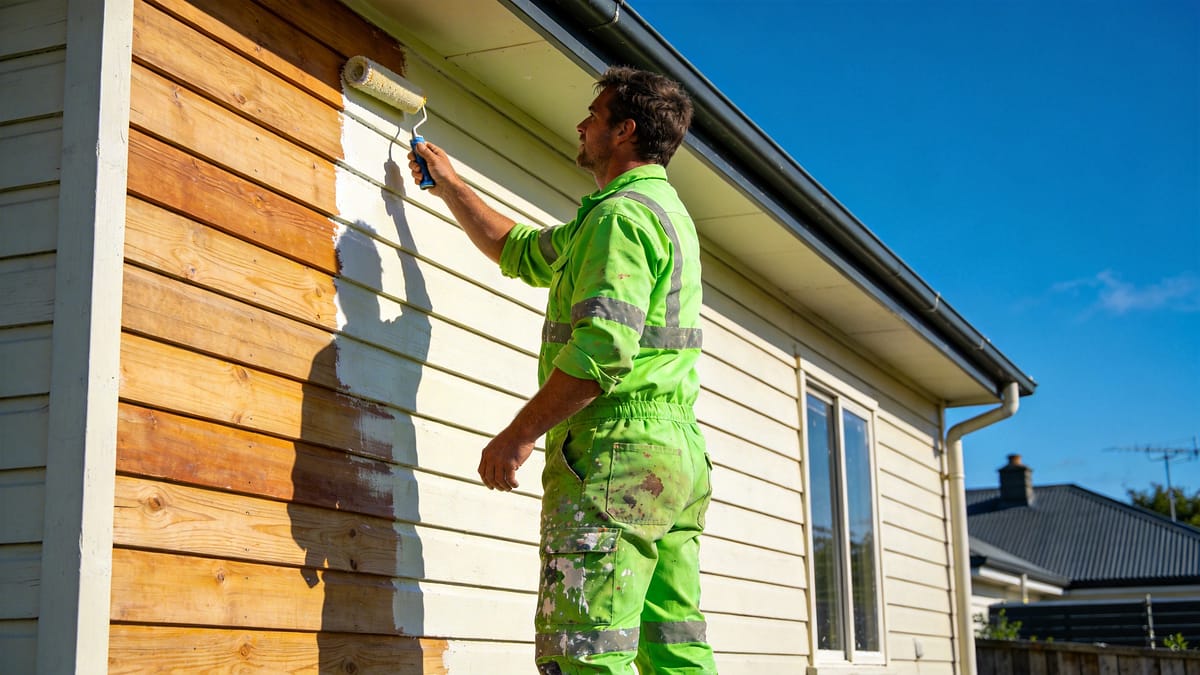
How much does it cost to paint a house exterior in Auckland?
Use these as August 2026 planning bands for a full residential exterior repaint. They are deliberately scenario-based: two homes with the same floor area can have completely different amounts of paintable wall, trim, preparation and safe-access work.
| House or project scenario | Indicative Auckland budget | What that band generally assumes | What can move it higher |
|---|---|---|---|
| Compact single-storey exterior | NZ$6,000–NZ$9,000 | Sound existing coating, easy clearance, limited detail and standard preparation. | More trim, a major colour change, local timber failure or a larger garage. |
| Standard brick or mixed-material home | NZ$7,500–NZ$12,000 | Single storey, ordinary access, painted trims and a clearly defined wall scope. | Painting all brickwork, porous masonry, extensive masking or multiple substrates. |
| Standard weatherboard family home | NZ$9,000–NZ$15,500 | Average preparation, sound timber overall, normal fascia/soffit detail and a standard coating system. | Peeling boards, old filler, timber repairs, detailed windows or difficult side access. |
| Two-storey or difficult-access exterior | NZ$13,000–NZ$22,000+ | More setup, slower production, additional height controls and some scaffold or platform allowance. | Steep sections, narrow boundaries, conservatories, overhead obstacles or scaffold on several elevations. |
| Older character home or heavy restoration | NZ$18,000–NZ$30,000+ | High-detail timber exterior, substantial scraping and sanding, many trims and a longer programme. | Full stripping, rotten timber, lead-paint controls, specialist joinery work or complex access. |
These are independent budgeting ranges, not fixed market tariffs or contractor quotes. Confirm whether each quote includes GST, paint, scaffold, repairs and all elevations. A price cannot be compared fairly until those five points match.
A 150 m² floor plan is not 150 m² of paintable exterior wall. Roof shape, storeys, wall height, windows, gables, garage faces and cladding detail all change the working area. Use the Exterior Painting Cost Calculator for a condition- and access-based starting range, then let a painter measure the site for a formal quote.
Which Auckland exterior repaint sounds most like yours?
Select the closest scenario. This does not replace an inspection; it gives you the right budget band to investigate before you spend time collecting quotes.
Choose the closest project
Standard Auckland weatherboard home
Weatherboard labour depends heavily on board edges, windows, failed filler and the percentage of coating that must be scraped back.
Refine this estimateWhat an Auckland exterior painting quote is actually paying for
The visible topcoat is only one part of the job. A professional quote should price the sequence needed to create a clean, dry, sound base and then apply the specified coating system safely.
Inspection and scope
Measure elevations, identify cladding, list trims and exclusions, inspect coating failure, moisture symptoms and access constraints.
Wash and treatment
Remove contamination and treat mould where required, using a cleaning method suited to the cladding rather than assuming every wall can be aggressively water-blasted.
Scrape and sand
Remove loose coating, feather failed edges and de-gloss sound surfaces so the new system is applied to a stable base.
Repair and prime
Deal with failed filler, open joints and minor defects; prime bare or repaired areas with products appropriate to the substrate.
Protect and coat
Mask windows and adjacent surfaces, control overspray where relevant, then apply the specified number of coats at suitable film build.
Inspect and clean up
Check coverage, edges and defects, complete touch-ups, remove protection and leave the agreed work areas tidy.

Preparation can dominate labour
On a sound repaint, coating work may move quickly. On peeling weatherboards, painters can spend more time preparing the base than applying finish coats. See why weatherboard houses need more prep before painting.
Height affects the whole process
Second-storey access is not just a one-off equipment charge. It can slow washing, scraping, masking, painting and inspection on every elevated section.
Scope matters more than the label
“Paint house exterior” might exclude windows, doors, downpipes, baseboards, garage walls, deck structures or repairs. The inclusion list decides whether two totals are comparable.
Two homes with similar floor area can land in different price bands
These examples show how scope changes a budget. They are deliberately transparent and should not be presented as completed projects or guaranteed contractor prices.
145 m² single-storey mixed-cladding home
The lower band is plausible because the painter can move efficiently and most defects are local. The quote still needs to state whether brick is being fully coated or only the surrounding trims and painted sections.
145 m² two-storey weatherboard home
The floor area did not change, but the workload did. Board-by-board preparation, detailed windows, scaffold and slower movement can push the project into a much higher band before larger timber repairs are added.
Some pages quote labour only, some include paint, some use floor area and others use paintable wall area. Some show prices before GST or exclude scaffolding and repairs. Before trusting a number, identify the unit, date, location and inclusions. For a wider benchmark outside Auckland, compare the average cost to paint a house exterior in NZ.
Weatherboard, brick, plaster and fibre cement do not price the same way
The material itself does not set a fixed price. It changes the cleaning, preparation, primer, coating method and detail level required.
| Exterior type | Main pricing pressure | What to inspect | Question for the quote |
|---|---|---|---|
| Timber weatherboard | Repeated edges and joins, failed old coating, sanding, filling, exposed timber and detailed trims. | Peeling at laps, soft timber, open joints, old filler, bare edges and window junctions. | How much scraping, feather-sanding, spot priming and timber repair is allowed? |
| Brick | Very different scope depending on whether only trims are painted or the full brick surface is being coated. | Porosity, mortar condition, efflorescence, contamination and existing-coating adhesion. | Does the price include all masonry, primer/sealer, mortar joints and the extra product needed for texture? |
| Plaster / monolithic | Crack assessment, patch compatibility, surface stability and moisture-related defects. | Recurring cracks, hollow or failed patches, staining, sealant joints and vulnerable penetrations. | Which cracks are cosmetic, which need investigation, and which repairs are excluded? |
| Fibre cement / Linea-style boards | Joint condition, factory coating condition, exposed edges and the correct compatible system. | Movement at joints, nail or screw points, damaged edges, chalking and local coating failure. | Is the proposed preparation and coating system compatible with the manufacturer’s requirements? |
| Mixed exterior | More masking, product changes, separate preparation methods and complicated sequencing. | Every substrate, including gables, garage walls, blockwork, joinery and metal details. | Can the quote break down each material and identify the primer/topcoat system for it? |
If brick is a major part of your property, use the more specific brick house painting cost in NZ guide before assuming that a brick home will automatically be cheaper.
Why the same repaint can cost more on one Auckland site
Auckland’s climate and housing sites influence both coating condition and the practical time available to complete exterior work. They should change the inspection and scheduling conversation—not be used as vague reasons for unexplained extras.
Rain and high humidity
NIWA’s Auckland climate summary describes plentiful rainfall through the year and high relative humidity in all seasons. The painter therefore needs suitable surface dryness, temperature and rain-free windows, with realistic weather contingencies in the programme.
Coastal exposure
Salt and contamination can accumulate on exposed homes. Building Performance guidance highlights regular cladding cleaning, especially near the sea, while warning that cleaning methods must not damage cladding or force water through joints.
Slopes, height and tight boundaries
Many Auckland properties combine height with narrow side access, retaining walls or split levels. WorkSafe identifies working at height as a serious risk; safe access and fall controls are real project inputs, not optional cosmetic extras.
Useful NZ references: NIWA’s Auckland climate summary, Building Performance cladding-maintenance guidance, and WorkSafe’s working-at-height guidance. For a deeper site guide, read how NZ weather affects exterior paint.
The seven factors most likely to change your final price
These variables are listed in the order homeowners should investigate them. Paint brand matters, but it usually does not explain the largest gap between two whole-house quotes.
Surface condition
Peeling, chalking, bare timber, failed filler, mould and repeated cracking increase labour before coating begins.
Exact scope
Walls alone are different from walls plus windows, doors, soffits, fascia, downpipes, baseboards and garage.
Height and access
Storeys, slopes, tight boundaries and overhead obstacles affect setup and production on every work stage.
Cladding detail
Weatherboard edges, decorative trims, textured masonry and mixed materials change both time and product use.
Repairs
Painting quotes often allow minor filling but exclude rotten timber, joinery restoration and major plaster defects.
Colour change
A dramatic light-to-dark or dark-to-light change can add coverage, edge detail and extra coating work.
Coating specification
Primer needs, number of coats, finish, product grade and substrate compatibility affect material and labour.
Hazard controls
Older coatings or suspect materials may require testing, dust control or specialist handling before disturbance.
Waiting can turn a coating job into a repair project
Fading alone is different from widespread adhesion failure or soft timber. The earlier you identify which condition you have, the more accurately you can budget.
Plan a normal repaint
- Colour is faded or uneven
- Surface is dirty or lightly chalky
- Only isolated cracks or bare spots
- Timber and cladding feel sound
Allow heavier preparation
- Peeling across multiple sections
- Many failed repairs or open joints
- Bare timber at edges and laps
- Recurring mould or moisture staining
Investigate before pricing paint
- Soft, rotten or swollen timber
- Recurring plaster cracks
- Water-entry symptoms inside
- Suspected lead or asbestos materials

WorkSafe notes that some paint-removal methods can create hazardous lead dust and fumes. If an older home has unknown coating history, ask how the painter will assess and control the risk. See WorkSafe’s lead-based paint guidance. Do not treat this as a DIY diagnosis.
The exterior painting quote checklist
Use the same checklist against every quote. A cheaper total is only cheaper if the surfaces, preparation, coating system, access and exclusions are genuinely the same.
Ask for these items in writing
- Every elevation and surface included in the price
- Windows, doors, trims, fascia, soffits, downpipes and baseboards
- Cleaning and mould-treatment method
- Scraping, sanding, filling, sealing and spot-priming allowance
- Which repairs are included and which are provisional or excluded
- Primer, topcoat products, finish and number of coats
- Scaffolding, platforms, edge protection and other access equipment
- Protection for paths, roofs, vehicles, landscaping and neighbours
- Start window, estimated duration and weather-delay process
- Cleanup, workmanship cover, GST and payment schedule
If the document uses allowances, provisional sums or exclusions, the final amount may change. Make sure you understand which number is fixed and which parts remain uncertain before signing. If you are still budgeting the whole property rather than only the outside, use the full House Painting Cost Calculator hub.
Exterior house painting cost Auckland FAQ
How much does it cost to paint a standard house exterior in Auckland?
A standard single-storey weatherboard home commonly needs a planning budget of roughly NZ$9,000–NZ$15,500. A sound, compact exterior may sit around NZ$6,000–NZ$9,000, while two-storey or preparation-heavy work can move beyond NZ$13,000–NZ$22,000. These are budget bands, not site-specific quotes.
How much does exterior painting cost per square metre in Auckland?
A single per-square-metre figure is easy to misuse because businesses may quote against floor area, paintable wall area or labour only. Exterior wall area is not the same as house floor area, and a rate may exclude trims, repairs, access equipment, paint or GST. A useful estimate must state the area basis and then adjust for condition, cladding, height and scope.
Is weatherboard more expensive to paint than brick?
Often, but not always. Weatherboard commonly requires more scraping, sanding, filling and edge work. Brick may be cheaper when only trims and already-painted features are in scope; fully coating porous brick, mortar joints and surrounding detail can still be labour- and product-heavy.
Does an exterior painting quote usually include scaffolding?
Never assume it does. Some quotes include the access allowance in the total, some show scaffold as a separate line, and others exclude it until the site is assessed. Ask which elevations require access equipment, who supplies it, how long the hire allows and what happens if weather extends the job.
Does the quoted price include GST?
It depends on how the contractor presents the quote. Confirm in writing whether the displayed total includes GST. This single check can materially change a comparison between two apparently similar prices.
How long does an Auckland exterior repaint take?
A straightforward professional exterior repaint may take around one to two working weeks, while heavy weatherboard preparation, detailed windows, height or weather interruption can extend the programme. Crew size also matters. Ask for a working-day estimate and a separate explanation of weather delays rather than relying only on calendar dates.
Can exterior painting reveal extra costs after work starts?
Yes. Rotten timber, moisture damage, failed underlying coatings and concealed repair needs may only become clear during preparation. A good quote explains the allowance already included and the approval process for variations, rather than leaving all preparation open-ended.
How many exterior painting quotes should I get?
Two or three detailed written quotes are usually more useful than collecting many vague prices. Give each painter the same requested scope, then compare preparation, coating system, access, exclusions, GST and timing line by line.
Start with your cladding, condition, storeys and access
The calculator is most useful before you request quotes: it helps you identify the likely price band and the questions that could materially change it. Use the result as a planning range, then confirm the actual scope on site.
Last reviewed: 14 August 2026 · Independent New Zealand budgeting guide · Figures are indicative and do not replace an on-site quote.