How to Compare Painting Quotes in NZ: A Like-for-Like Checklist
The lowest total is not automatically the cheapest job. To compare painting quotes in New Zealand properly, first make every contractor price the same scope, then check preparation, coating system, exclusions, GST, access costs and the rules for variations.
Convert each quote into a comparable total: the written price, plus known excluded work, plus GST where the quote says it is extra. Then compare the work behind that number. If the scope, prep or number of coats differs, you are not yet comparing the same job.
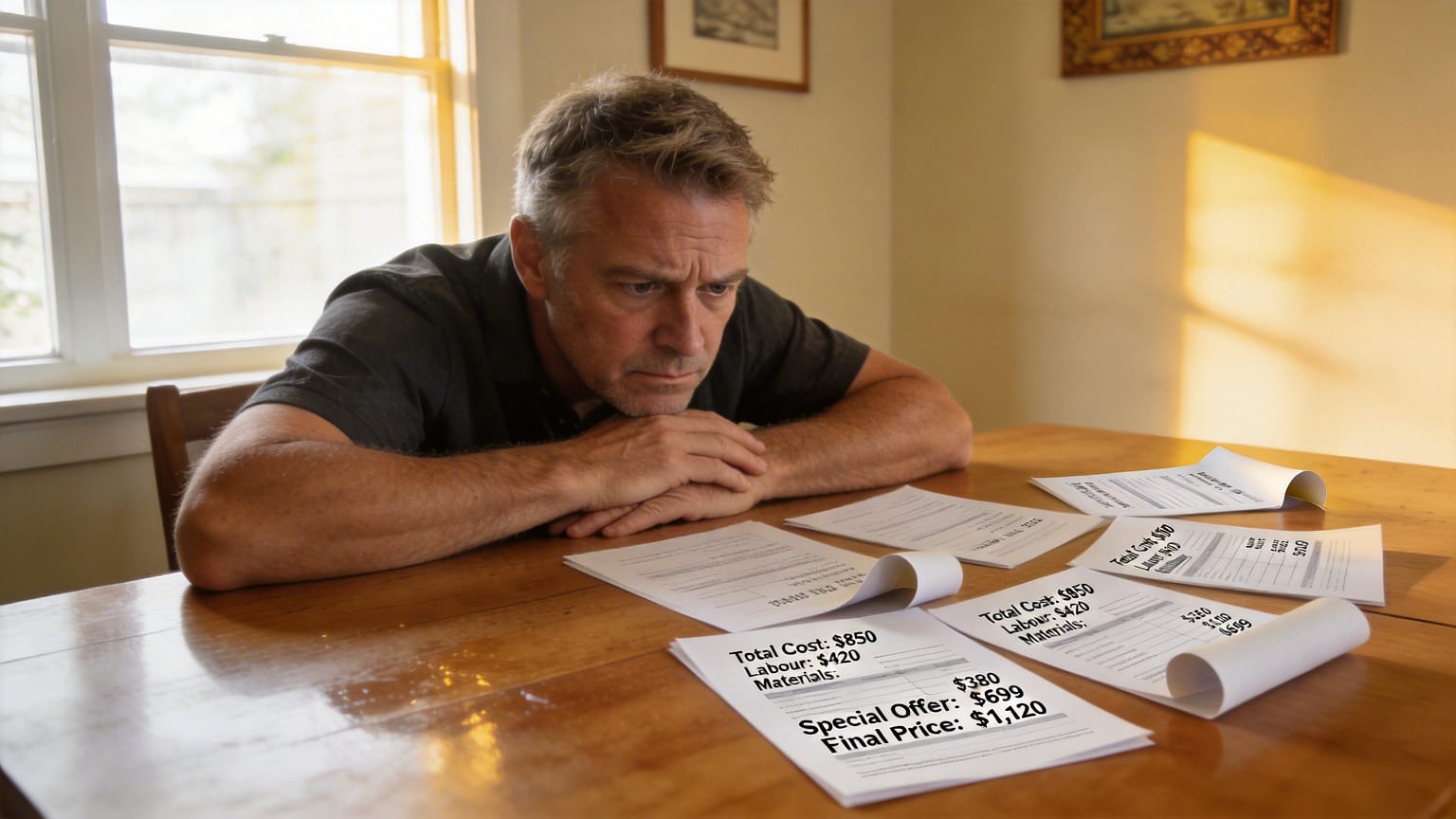
Step 1: confirm whether each price is a quote or an estimate
This distinction matters before you compare a single dollar. New Zealand Consumer Protection describes an estimate as a best guess rather than a set price. A quote is an offer to do the defined job for a specified price; after acceptance, extra charges generally require agreed extra work or a changed scope.
1 Estimate
Useful for early budgeting when the painter has limited information. It may be based on house size, photos or a short discussion and can change when the real condition, access or repair work becomes clear.
2 Quote
Useful when choosing a painter because the price is attached to a defined scope. It still needs clear assumptions, exclusions and a written process for changes discovered after work starts.
Do not put a phone estimate beside a site-inspected written quote and treat the difference as a saving. Ask the first contractor to quote the same written scope. For a deeper explanation, read painting quote vs estimate in NZ.
The 12 points every NZ painting quote should let you compare
A strong quote does not need to be long for the sake of it. It needs to remove uncertainty. Use the table below as a line-by-line brief and ask every painter to respond against the same job description.
| Check | What should be clear | Why totals can differ |
|---|---|---|
| 1. Price status | Quote or estimate; validity period; GST included or additional. | An estimate and a fixed quote carry different levels of price certainty. |
| 2. Exact scope | Rooms, elevations and every surface included: walls, ceilings, trim, doors, windows, soffits, fascia or weatherboards. | “Paint the house” can hide major differences in included areas. |
| 3. Existing condition | The condition assumed when pricing and any defects already identified. | Sound surfaces need fewer labour hours than peeling, stained or heavily patched surfaces. |
| 4. Preparation | Washing, scraping, sanding, filling, caulking, mould treatment, stain blocking and spot priming. | Preparation is labour-heavy and vague wording makes a low price difficult to trust. |
| 5. Repairs | What minor repairs are allowed for; what counts as major repair; any provisional allowance. | Plaster, rotten timber or damaged substrate may sit outside normal painting prep. |
| 6. Coating system | Primer or sealer, product range, finish/sheen and number of coats by surface. | One coat, two full coats and “as required” are not equivalent specifications. |
| 7. Access | Ladders, edge protection, scaffold, difficult ground or tight side access. | Access equipment and slower working conditions can materially change the real total. |
| 8. Protection | Masking, drop sheets, furniture moving, overspray control and landscaping protection. | A lean quote may leave setup, moving or protection to the homeowner. |
| 9. Programme | Likely start window, estimated duration, crew size and weather-delay approach. | Very different programmes may reflect different labour allowances or different scopes. |
| 10. Clean-up | Daily tidy-up, rubbish removal, final clean and reinstatement. | “Completed” should not leave another paid task behind. |
| 11. Payment | Deposit, progress payments, final payment trigger and accepted payment method. | Price alone does not show your cash-flow exposure or leverage at completion. |
| 12. Exclusions and variations | Everything not included; who approves extra work; how the price and time change will be recorded. | Unwritten extras are a common reason a cheap starting figure stops being cheap. |
If you need a baseline before using this checklist, see what is included in a house painting quote. Use it to write one scope, not three slightly different requests.
Painting quote price normaliser
Enter up to three quotes. Add costs that are known to be excluded—such as scaffold, a separately priced repair allowance or homeowner-supplied materials. Untick “includes GST” only where the contractor’s price specifically states that GST is additional.
Quote A
Quote B
Quote C
How it calculates: written price + 15% if that price is stated as excluding GST + known excluded costs. New Zealand’s current GST rate is 15%. This is a comparison aid, not a prediction of unknown repairs or variations.
Why a cheaper quote can become the higher comparable total
Here is an illustrative comparison—not a market price guide. All three painters are looking at the same exterior repaint, but their written totals use different assumptions.
NZ$10,350 incl. GST
Scaffold excluded: NZ$2,250
Known timber repair allowance excluded: NZ$1,125
Comparable: NZ$13,725
NZ$12,900 incl. GST
Scaffold included
Ordinary minor repairs included within a stated limit
Comparable: NZ$12,900
NZ$11,250 + GST
GST: NZ$1,687.50
Known access equipment excluded: NZ$600
Comparable: NZ$13,537.50
The normalised number still does not choose the painter for you. It simply removes obvious price distortion. Next, compare how much preparation, repair risk and coating work each contractor has actually allowed for.
Preparation and paint system: the two lines most likely to change value
Two quotes can both say “two coats” and still describe different work. One painter may mean one primer plus two topcoats on bare or repaired areas; another may mean two finish coats only, with limited spot treatment. Product name alone also does not tell you whether the substrate has been prepared for that system.
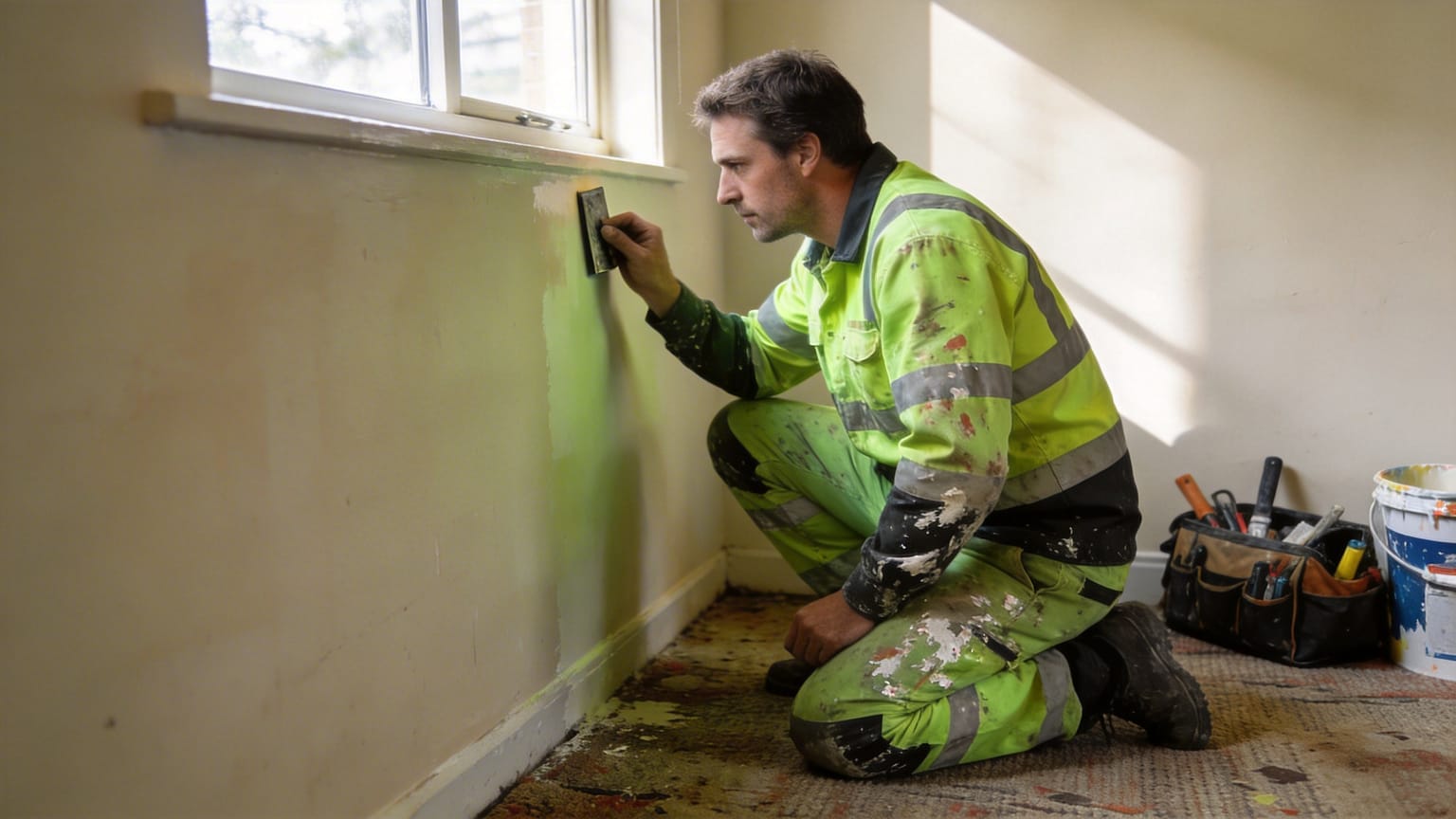
Replace “standard preparation” with verbs
Ask what will be washed, scraped, sanded, filled, caulked, treated, sealed and primed. Ask whether this applies to all surfaces or only visibly affected spots. The answer turns a vague promise into a measurable scope.
Replace “two coats” with a system
Ask for the primer/sealer where required, topcoat product or product range, sheen, colour-change assumption and coat count for each main surface type. Clarify what happens if coverage is poor after the stated coats.
Put a boundary around minor repairs
“Minor repairs included” needs a limit: type of defect, approximate extent or labour allowance. Major plaster repair, widespread coating failure and rotten timber are different tasks from routine paint preparation.
Do not price over unresolved moisture
Staining, bubbling or soft substrate may signal a problem that paint cannot solve. Ask whether the quote assumes the source is repaired and the surface is dry before coating. A cosmetic allowance is not a building diagnosis.
How complete is the quote you are reading?
Tick only what is stated clearly in writing. The score measures quote completeness and comparability, not workmanship or whether the painter is trustworthy.
Painting quote red flags—and what a better answer looks like
| Signal | Wording or behaviour | Your next move |
|---|---|---|
| Red | One-line scope, no exclusions, no paint system and pressure to accept immediately. | Do not infer missing details. Request a revised written quote before paying a deposit. |
| Red | Verbal reassurance that “everything is included” while the document says otherwise or says nothing. | Ask for the promise to be added to the accepted scope in writing. |
| Amber | “Preparation and repairs as required” with no allowance, limit or variation rate. | Ask which tasks are fixed, which are provisional and how extras will be approved. |
| Amber | A price far below the other like-for-like quotes. | Recheck GST, scaffold, coat count, preparation hours, materials and excluded areas before treating it as a bargain. |
| Green | Named surfaces, observable condition, task-based prep, product system, exclusions and payment stages. | Use this document as the comparison baseline and ask the other painters to price the same scope. |
| Green | A clear written process requiring your approval before extra work proceeds. | Confirm how price and programme changes will be documented and keep the agreed record. |
The best quote is the one you can audit
A detailed quote does not prove a perfect outcome, and a short quote does not prove poor work. But a document with clear scope, assumptions and variation rules gives both sides something objective to manage. That reduces the room for different memories later.
Check the contractor as well as the document
Quote comparison is only half the decision. Before accepting, confirm who is contracting with you, who will be on site and who is responsible if something is damaged or the agreed finish is not delivered.
- Identity: match the trading name to a legal person or business, physical/contact details and the name that will appear on the invoice.
- Recent relevant work: ask for examples or references involving the same surface type and a similar level of preparation—not only attractive finished photos.
- Insurance: ask whether the contractor holds current public liability cover relevant to the work and request evidence if this affects your decision.
- Who performs the work: clarify whether employees, subcontractors or the quoting painter will complete the job and who supervises quality.
- Completion standard: agree how defects, touch-ups, colour coverage, clean-up and the final inspection will be handled before the last payment.

Copy this message to make three quotes comparable
Send the same clarification request to every painter. Their answers can be attached to the quote or incorporated into a revised scope before you accept.
Get a budget baseline before choosing a painting quote
An online estimate cannot inspect peeling paint, access or hidden damage. It can still help you sense-check the broad budget before you spend time comparing formal quotes. Use the calculator that matches the project, then treat the contractor’s inspected written scope as the booking document.
FAQ: comparing painting quotes in New Zealand
How many painting quotes should I get in NZ?
For many homeowners, three detailed quotes provide enough comparison to identify an outlier without creating an unmanageable process. The more important rule is that each painter receives the same written scope. Three different scopes do not create a fair market comparison.
Can a painter charge more than an accepted quote?
New Zealand Consumer Protection says a quote is an offer to do a job for a specified price. After you accept it, the provider generally cannot charge more unless you agree to extra work or the scope changes. Ask for any variation, its price and its effect on timing in writing before the extra work proceeds.
Should a painting quote include GST?
The document should clearly say whether GST is included, additional or not applicable to that supplier. Do not assume. If a GST-registered contractor states a price “plus GST”, add the current 15% GST when comparing it with GST-inclusive consumer totals.
Why can two painting quotes for the same house be so different?
They may include different surfaces, preparation, repair allowances, products, coat counts, access equipment, protection, crew time or exclusions. A large gap is a prompt to compare scope line by line; it is not proof that the lower quote is bad or the higher quote is better.
Is the cheapest painting quote always risky?
No. A well-organised painter may be genuinely efficient. The risk appears when the low price cannot be explained on the same written scope. If the contractor confirms the same prep, coating system, access, repairs and exclusions, the lower quote may represent good value.
What should happen if hidden damage is discovered?
The original quote should state its assumptions and how hidden work will be handled. Ask the painter to stop at the affected area, explain the problem and provide the proposed variation price and time impact for your written approval before proceeding.
Do I need a site visit before accepting a quote?
Not every simple job requires one, but a visit is valuable when surfaces are aged, access is difficult, repairs are uncertain or the project is large. If the quote is based on photos, make sure it states what condition and access it assumes and what could change the price.
How do I choose when two quotes have similar comparable totals?
Compare preparation detail, coating system, repair boundaries, supervision, recent relevant references, insurance response, programme, payment stages and variation process. Choose the proposal that best matches your required outcome and gives you the clearest way to verify completion.
NZ consumer reference: Guidance on quotes, estimates, contracts and consumer service guarantees was checked against Consumer Protection NZ: Quotes and estimates and the Consumer Guarantees Act overview. GST is checked against Inland Revenue’s GST guidance. This page provides general comparison information, not legal advice.