Best Time of Year to Paint a House in NZ
The best general window for exterior house painting in New Zealand is late spring to early autumn—but the calendar alone cannot tell you whether a wall is ready for paint.
This practical guide shows you how to choose the right month, check the actual weather window and avoid rain, dew, cold surfaces and harsh direct sun.

When is the best time to paint a house exterior in NZ?
For most New Zealand homes, late spring, summer and early autumn give the best chance of dry substrates, workable temperatures and enough daylight to complete preparation and coats without rushing.
That makes roughly late October through April a useful planning window—not a guarantee. Auckland can be warm yet humid and showery. Wellington can be dry but too windy. Canterbury may have a fine afternoon after a cold, dewy morning. Otago and Southland generally offer a shorter warm-weather window.
The best month is not as important as the best run of conditions. A settled February day can fail if the western wall is scorching hot; a mild April day may work well if the wall is dry and the coating has enough time to cure before temperatures fall.
New Zealand's climate also varies sharply by region and exposure. Earth Sciences New Zealand notes that rainfall is spread through the year in most areas, with a general summer dry period, while northern and central areas often receive more winter rain. This is why a national “paint only in summer” rule is too crude.
The four conditions that matter more than the season name
The surface is genuinely dry
Do not judge only by the air. Shaded weatherboards, end grain, joints and repairs can retain moisture after the rest of the wall looks dry.
The product limits are met
Check the exact label or technical data sheet for acceptable air and surface temperatures, humidity and recoat time.
Rain and dew will stay away
The forecast must cover the coating's vulnerable drying period—not merely the hour in which it is rolled or brushed on.
The wall is not weather-stressed
Strong sun, gusty wind and a rapidly cooling surface can be just as problematic as an obviously wet day.
Can I paint outside today? Use this quick checker
Enter the conditions at the wall—not only the general town forecast. This gives a practical screening result; the paint manufacturer's instructions still take priority.
Exterior painting weather check
Use a surface thermometer and moisture meter where the substrate or coating system requires them.
Why the cautious temperature check? Resene's general specification uses 10–35°C as a common application range and says the surface should be at least 5°C above the dew point unless a product is specifically designed for other conditions. Your selected primer or topcoat may have different limits.
Best months to paint a house by NZ region
Use these ranges to plan quotes, access and preparation. They are not fixed start/stop dates: an exposed coastal house, shaded valley property or elevated site may behave very differently from another home in the same city.
| Area | Useful planning window | Local issue to check | Practical approach |
|---|---|---|---|
| Northland & Auckland | October–April | Humidity, frequent showers, salt near the coast | Do not mistake warmth for dryness. Check shaded walls and leave clearance before evening moisture. |
| Waikato & Bay of Plenty | October–April | Fog, dew and humid mornings | Allow a later start where overnight moisture lingers; confirm timber and joints are dry. |
| Hawke's Bay & eastern regions | October–April, sometimes longer | Intense sun and hot substrates | Follow shade around the house and avoid painting a wall at peak surface temperature. |
| Wellington & lower North Island | October–April | Wind, fast-changing fronts, exposed elevations | Choose a settled weather system, not simply a rain-free icon. Wind can affect control and drying. |
| Nelson, Marlborough & Canterbury | October–April | Strong sun, wind, cool nights or frost at inland sites | Wait for morning moisture to clear and finish early enough for the coating to dry before the evening drop. |
| West Coast | November–March | High rainfall and narrow dry windows | Plan smaller workable stages and build contingency days into the programme. |
| Otago & Southland | November–March | Lower temperatures, shorter days, dew and frost | Use the warmest stable window and verify overnight conditions as carefully as the daytime forecast. |
These are planning ranges derived from typical regional patterns, not paint-system specifications. Always assess the specific site and forecast.
Spring, summer, autumn or winter: which season is best?
| Season | Overall suitability | What works | What can go wrong |
|---|---|---|---|
| Late spring | Longer days, milder surfaces and time to finish before peak summer heat. | Showers and changeable fronts can interrupt washing, prep and coating. | |
| Summer | Long working windows and generally quicker drying. | Direct sun, hot dark colours, humidity and sudden showers can still create failure risk. | |
| Early autumn | Moderate daytime conditions and less extreme surface heat. | Shortening days and earlier dew reduce the safe afternoon application window. | |
| Winter | Selected small or sheltered jobs may proceed on a dry, mild day. | Cold substrates, slow drying, shade, condensation and fewer consecutive workable hours. | |
| Any stormy period | Use the time for planning, colour selection and indoor work. | Wind-driven rain can wet joints and surfaces long after visible rain stops. |
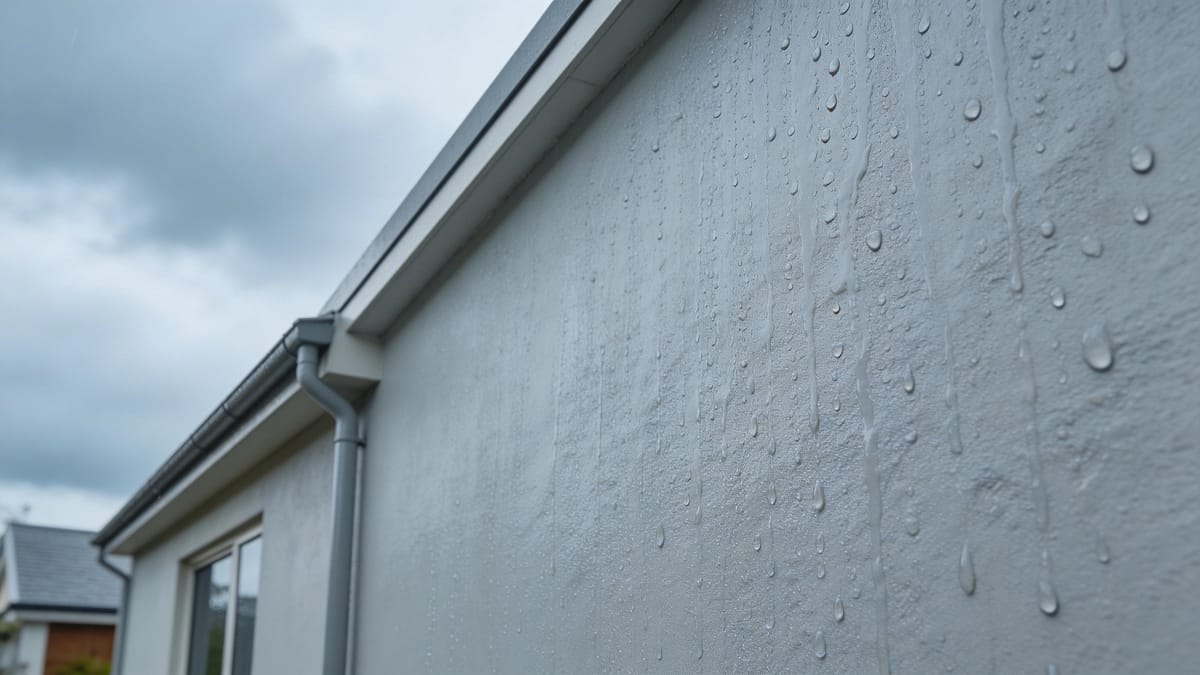
Why the hottest week is not automatically the best week
Paint can become difficult to apply evenly when a wall is much hotter than the surrounding air. Water may leave the coating too quickly, lap marks become harder to control and the painter loses working time. Dark colours and metal can heat rapidly in direct sun.
The better strategy is to work on a dry wall in open shade and move around the building as solar exposure changes. “Warm and stable” is usually more useful than “as hot as possible”.
Plan the painting day around sun, shade and dew
A single house can contain four different microclimates. The west wall may be ideal at 9 am while the south wall is still damp and the east wall is already heating in direct sun.
North-facing walls
They receive strong daytime sun. Paint in a cooler part of the day or once the wall has moved into suitable shade.
South-facing walls
They may stay cool and damp longer. Give condensation and wash water more time to leave joints and weatherboards.
East-facing walls
Morning sun can heat them early. A later window may be better, provided the paint can dry before evening moisture.
West-facing walls
They often heat strongly in the afternoon. Morning can be the safer working window after any dew has dried.
The right time also depends on the house surface
“Exterior paint” covers very different substrates. The same fine day may be acceptable for one dry, prepared wall and unsuitable for another that is still holding moisture or heat.
Timber weatherboards
Check end grain, laps, cracks and repaired areas. Timber movement and retained moisture make preparation and a stable dry spell especially important.
Plaster or fibre-cement
Confirm cracks and repairs have cured and the wall is dry. A visually dry surface does not prove that deeper repairs are ready to coat.
Painted metal
Metal can become far hotter than the air in direct sun and can cool quickly later. Measure the surface and follow the coating data sheet.
Coastal exteriors
Salt, wind and exposure raise the importance of cleaning, correct primers and sheltered application conditions. Let washing dry fully before coating.

Do not schedule the repaint too late in the coating's life
If peeling, cracked sealant and exposed timber are already widespread, the job needs more repair, priming and dry time. Planning while the old coating is weathered but still largely sound gives you more choice over timing and can prevent a maintenance repaint becoming a restoration project.
Can you paint a house exterior in winter in New Zealand?
Sometimes—but winter gives you fewer forgiving hours. Small, sheltered or urgent maintenance areas may be possible on a settled, mild day with a suitable product. A full exterior repaint is harder to programme because washing dries slowly, shaded substrates remain damp, temperatures fall earlier and dew can return before a fresh coat is ready.
Reasonable candidate
A dry, sheltered area with verified substrate conditions and a coating approved for the temperature range.
Proceed cautiously
A larger wall where the safe application window begins late and ends early.
Wait
Damp timber, persistent shade, overnight frost, incoming rain or a surface likely to reach dew point.
Interior painting is less season-dependent because the room can be ventilated and conditions can often be controlled. Even indoors, however, cold and high humidity can extend dry and recoat times.
A seven-day decision plan before exterior painting
This sequence helps prevent the common mistake of choosing one fine day without allowing for washing, repairs, drying and follow-up coats.
- 7 days out: review the full forecast pattern, not only the planned start day.
- 5–6 days out: confirm access, scaffolding, surface repairs, paint system and manufacturer requirements.
- 3–4 days out: wash early enough for joints, timber and shaded areas to dry completely.
- 2 days out: check whether rain has reached sheltered edges, gaps or porous repairs.
- 1 day out: confirm temperature, humidity, wind, rain timing and likely overnight dew.
- On the day: inspect and measure the actual target wall; adjust the elevation order as sun and shade move.
- After coating: protect the specified drying and recoat period; do not assume “touch dry” means fully cured.
Forecast habit: use the longer-range outlook for planning, then recheck the local forecast and MetService rain radar close to application. Radar helps with near-term rain movement but does not replace the product instructions or a surface inspection.
Estimate the job before the weather window arrives
A full repaint needs more consecutive workable time than a single elevation or isolated maintenance area. Estimate the scope early so preparation, access and budget are ready when conditions align.
Build an initial budget range when the project may include both interior and exterior painting.
Best match for this guide Try the Exterior Painting Cost Calculator →Estimate the likely scale of exterior work before choosing a painting window.
Six timing mistakes that shorten the safe working window
1. Booking a date, not a weather system
A calendar date is provisional. The final go/no-go decision belongs close to application and at the property.
2. Checking air temperature only
The wall can be colder, hotter or wetter than the air—especially metal, shaded timber and dark-coloured cladding.
3. Treating touch-dry as rain-ready
Coatings can remain vulnerable after the surface first feels dry. Follow the stated drying and recoat conditions.
4. Painting straight after washing
Water remains in laps, cracks, joints and porous repairs after the broad surface looks dry.
5. Starting the last coat too late
Shade, temperature drop and dew can arrive while the coating is still in its early drying stage.
6. Assuming summer removes all risk
Heat, direct sun, coastal wind, humidity and sudden showers still require active planning.
Frequently asked questions
What is the single best month to paint a house in New Zealand?
There is no single best month nationwide. January and February often offer long, warm working days, but local humidity, rain, wind and extreme sun still matter. Late spring or early autumn may produce gentler surface conditions. Choose a stable weather window within the best season for your region.
What temperature is best for exterior painting?
Use the range stated for the exact primer and paint. As a general reference, Resene specifications commonly use 10–35°C and require the surface to remain at least 5°C above the dew point unless a product is designed for different conditions. Surface temperature—not only air temperature—matters.
How long after rain can you paint outside?
There is no safe universal number of hours. Drying depends on the substrate, wind, shade, humidity, temperature and where water has entered. Weatherboard laps, end grain, cracks and repairs can stay wet after the face appears dry. Inspect or measure the substrate rather than relying on elapsed time alone.
Can exterior paint dry before evening dew?
Only if application begins early enough and the temperature, humidity and product drying time allow it. Dew can affect a coating that feels touch dry but has not developed enough early resistance. Stop painting with a realistic buffer before the wall cools.
Is it better to paint in spring or summer?
Both can be suitable. Summer usually provides longer working hours, while late spring can offer milder wall temperatures. Spring is more vulnerable to unsettled weather; summer can bring hot direct sun. The better choice is the period with stable conditions for your region and elevation.
Can a house be painted in Auckland in winter?
Some exterior work is possible during a settled, mild Auckland winter window, but warmth does not guarantee a dry substrate. Frequent rainfall, humidity, shade and short drying windows make a full repaint harder to schedule than in late spring through early autumn.
Does exterior house painting cost more in bad weather?
Weather can affect programme length, access bookings and the number of productive hours, but pricing depends on the contractor and scope. The larger cost risk is allowing maintenance to deteriorate until extensive scraping, repairs and priming are required.
Technical references used in this guide
- Earth Sciences New Zealand: Overview of New Zealand's climate — national temperature, rainfall and seasonal context.
- Earth Sciences New Zealand: National and regional climate maps — regional climate variables and long-term patterns.
- Resene: Check the weather before painting — application temperature, dew point and weather guidance.
- MetService rain radar — near-term rainfall monitoring across New Zealand.
Product formulations differ. The current label and technical data sheet for the exact coating always override general guidance on this page.