New Zealand pre-sale preparation guide
Is Repainting Better Than Renovating Before Sale in NZ?
Often, yes—when your home is sound and functional but looks tired. A targeted repaint can address visible wear with a smaller scope than replacing a kitchen or bathroom. The decision changes when there are defects, the home already presents well, or buyers are likely to renovate anyway.
Compare three options: refresh, renovate, or sell as is. Choose the work your likely buyers will notice, then calculate how much extra sale price you need to recover the full cost.
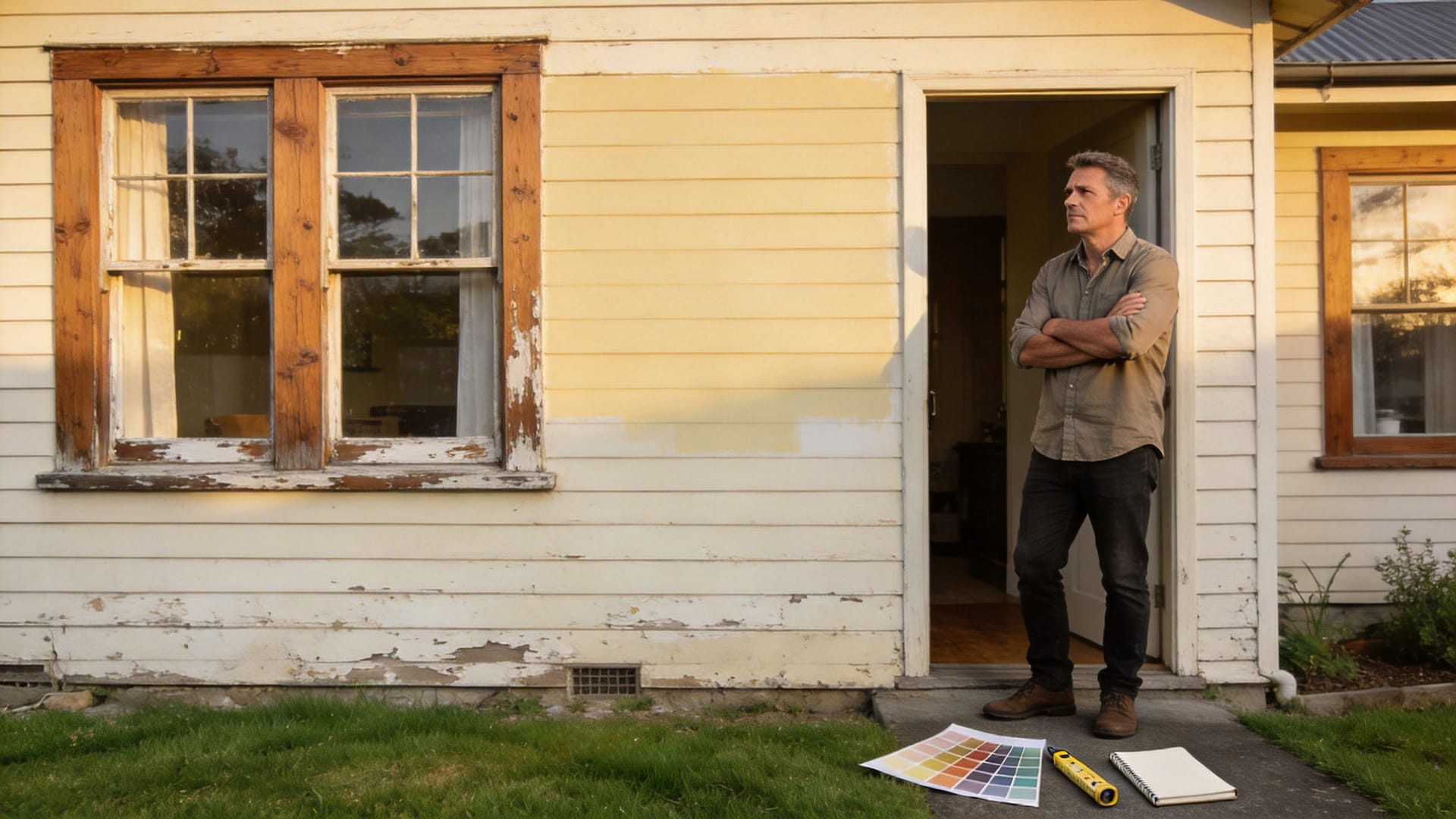
Sound surfaces, visible scuffs or distracting colours, and time to finish the work properly.
A specific functional shortcoming matters to local buyers and the full cost is supported by evidence.
The home already presents well, the budget is tight, or likely buyers want to make their own changes.
Should you paint, renovate or sell as is?
The best pre-sale project fixes a problem that matters to the next buyer without creating an expensive new one for you. A complete renovation may make a house more appealing, but a higher sale price only helps if it exceeds the extra spending and selling costs.
New Zealand’s Settled guide to preparing a property for sale recommends thinking carefully before major kitchen or bathroom renovations because you may not recover the cost. It also identifies smaller presentation improvements as useful options. Your home’s condition and local buyer expectations should determine the scope.
On a narrow screen, scroll the table sideways to compare all three columns.
| Your situation | Reasonable starting point | What could change the decision? |
|---|---|---|
| Sound home, worn walls or strong colours | Clean first; repaint the rooms or complete wall surfaces that still look tired. | Extensive preparation, poor substrates or an already acceptable finish can weaken the case. |
| Clean, well-maintained home | Keep good finishes. Concentrate on cleaning, lighting and presentation. | A particular room may still need attention if it is noticeably out of step with the rest. |
| Dated but functional kitchen or bathroom | Price repairs and a limited refresh before considering replacement. | Buyer feedback and comparable sales may show that functionality, rather than appearance, is the obstacle. |
| Leaks, rot or unexplained damage | Investigate the cause and get a repair scope before budgeting for paint. | Repairing before sale or selling with appropriate disclosure may each be viable; obtain property-specific advice. |
| Likely renovator or redevelopment buyer | Consider a tidy, accessible property with minimal cosmetic spending. | Confirm this buyer profile with an agent; do not assume every older home will be redeveloped. |
| Clear evidence buyers value a specific upgrade | Compare a tightly defined renovation with repainting and selling as is. | The conservative expected price difference must justify the extra cost, time and uncertainty. |
| Photography or settlement plans leave little time | Choose a smaller scope you can complete well. | Trade availability, unresolved repairs and exterior weather conditions can make even painting a poor fit. |
Presentation, sale price and profit are different outcomes
Fresh paint may remove a visible objection. That does not establish how much a buyer will pay, whether the property will sell faster, or whether the work will pay for itself. Assess the net result after costs, with an allowance for uncertainty.
For the wider difference in project scope, see our paint or renovate cost comparison for NZ homes. Here, the focus is the decision immediately before a sale.
How much extra sale price would the work need to recover?
Start with the cost hurdle, before assuming a return. This calculator compares repainting and a renovation package against selling the same property with your chosen basic preparation already completed.
It calculates the uplift you would need, not the uplift you will get. Enter the extra costs of each option above that baseline. Include GST where charged, and use the same basis for both options.
Your required sale-price uplift
Option A · Repainting
Option B · Renovation package
A lower cost hurdle does not establish which option will produce the best sale result. Compare these figures with conservative, property-specific advice about likely prices, then allow room for uncertainty.
The calculation
Cost-only hurdle = work + other costs and reserve + extra delay costs.
With marginal commission = total extra cost ÷ (1 − commission rate as a decimal).
For a comparison between the two options, divide the difference in their costs by the same commission factor. The formula assumes a constant marginal rate; it does not model changes in tax or fee tiers.
A repainting-versus-renovation budget example
Imagine a sound home with tired paint and a usable but dated kitchen. The seller is comparing a targeted repaint with a kitchen renovation that includes the associated painting. These are invented planning amounts, not national prices, quotes or sale results.
| Incremental cost | A · Targeted repaint | B · Renovation package |
|---|---|---|
| Work package | $5,500 | $35,000 |
| Other costs and reserve | $1,000 | $3,500 |
| Extra costs caused by delay | $500 | $2,400 |
| Total budget to recover | $7,000 | $40,900 |
The renovation needs $33,900 more sale price than the repaint to leave the seller equally placed on these assumed costs, before any difference in commission or tax. If the renovation achieved only $25,000 more than the repaint, the seller would be $8,900 behind on this comparison.
The repaint also needs justification: spending $7,000 does not prove it will add $7,000. Ask whether a smaller scope could solve the visible problem, and compare the result with selling after basic cleaning and preparation.
Use a conservative case before committing
Recalculate with the higher credible quote, a realistic delay allowance and the lower end of the agent’s supported price range. If the case only works when costs stay at their minimum and the sale reaches the most optimistic estimate, there is little room for error.
For more context on value claims, read how much value painting can add to a home in New Zealand. Treat broad claims as a starting point for questions, not a substitute for evidence about your property.
What should you paint before selling?
Walk through the home in the order a buyer will see it: listing photos, street approach, entrance, main living spaces, then bedrooms and service areas. Make a list of visible problems at normal viewing distance. Do the cleaning first so you can separate dirt from finishes that actually need repainting.
Bayleys’ pre-sale paint guide also recommends assessing what a clean can achieve before repainting everything. A selective scope is useful only if the finished areas look coherent; conspicuous touch-up patches can create another job.
| Area | Consider painting when… | Keep the scope under control |
|---|---|---|
| Entrance and hallway | Scuffs, chipped trim or uneven colour make the first walk-through feel neglected. | Price complete affected surfaces. Test a touch-up before relying on it across an entire hallway. |
| Main living spaces | Visible wear or a strong colour dominates the room in person and in photos. | Check adjacent rooms so the refreshed space does not leave an obvious unfinished transition. |
| Front door and visible exterior | The coating is worn and the underlying material is serviceable. | Include preparation and safe access. Confirm that the proposed scope addresses the condition of the affected surfaces. |
| Bedrooms | Damage or a very individual colour distracts from an otherwise tidy room. | Keep clean, compatible finishes that already present well. |
| Ceilings and water-marked areas | A resolved problem has left visible staining or the finish is otherwise poor. | Establish the cause first. Covering an unexplained stain is not a repair. |

Choose colours that work with what is staying
Assess the flooring, benchtops, joinery, roof and neighbouring surfaces before choosing a neutral. A white that works in one room may look cold or yellow in another. Test a large sample in the actual room, in daylight and evening light, before ordering the full quantity.
Keep the palette consistent with the home’s character. You do not need to remove every distinctive feature; the aim is a well-maintained property whose permanent finishes sit comfortably together. Bayleys’ paint guide above recommends testing colours in the home’s actual light.
Should you renovate the kitchen or bathroom before selling?
Separate dated appearance from poor function or failure. A usable kitchen with an unfashionable finish presents a different decision from one with water-damaged cabinetry, broken fittings or a layout that does not serve the home.
| Condition | Investigate first | Avoid assuming… |
|---|---|---|
| Functional, clean, dated finish | Whether cleaning, minor repairs, compatible handles or suitable cabinet refinishing would be enough. | That buyers will repay a complete replacement chosen to your taste. |
| A few failed components | The cause and cost of repairing or replacing those components, including matching and associated trades. | That a small-looking change has no flow-on costs. |
| Leaks, deterioration or significant functional problems | A competent assessment, a complete repair scope and the alternative of an appropriately disclosed sale. | That wall paint repairs cabinetry damage, plumbing defects or failed shower waterproofing. |
Cabinet painting can be an option when the underlying units are sound, but the surface and coating system must suit the job. Price the preparation and finishing before calling it a cheap refresh. Resene’s renovation-budget guide discusses selective updates and the importance of suitable preparation.
If a proposed renovation changes structure, layout, plumbing or wet-area construction, check the relevant requirements before locking in the budget and sale date. MBIE explains how to check whether building or resource consent is needed; requirements depend on the actual work.
Set a pre-sale budget and get comparable quotes
Do not set the budget as an automatic percentage of the asking price. Define the visible or functional problem, obtain a quote for solving it, and compare that cost with a conservative assessment of the likely benefit.
Our guide to real house painting prices in New Zealand can help with initial budgeting. A pre-sale quote still needs your room count, surface condition, access and finish requirements; a whole-house average does not price a selective repaint.
- Exactly what gets paintedList rooms, walls, ceilings, doors, trim and exterior elevations. State the areas staying as they are.
- Preparation and repairsIdentify cleaning, filling, sanding, coating removal and repairs included in the price, plus how discoveries will be priced.
- The finished resultAgree products, finish, colour changes and coating requirements. Include adjacent surfaces needed for a consistent result.
- Access and disruptionConfirm scaffolding or other access, furniture moving, protection, disposal and final cleaning.
- Price and variationsCheck GST, exclusions, allowances, payment stages and written approval for changes before extra work starts.
- Completion and handoverAgree the programme, inspection, touch-ups and the product-specific drying or curing time needed before normal use.
Write a stopping point into the brief
“Prepare this home for sale with a consistent finish in the listed areas. Quote separately for any additional work and explain the problem it solves before we approve it.”
That boundary matters when one refreshed room makes another look dated. Bayleys’ guide to DIY work before selling discusses this scope-creep risk and the trade-off between saving labour costs and achieving a suitable finish.
Use an estimate to start the conversation, then replace it with a property-specific quote in the comparison calculator above.
Work backwards from photography and open homes
A project only helps the campaign if it is ready when buyers see it. Confirm the photography date with your agent and the achievable handover date with the trades before booking work. There is no reliable universal “days to repaint” figure without a scope.
- Agree the sale plan. Decide which buyer group and presentation standard you are aiming for, then set the scope and spending limit.
- Resolve unknowns. Investigate damage, confirm repairs and check any required approvals or documentation before cosmetic finishing.
- Schedule messy work first. Coordinate trades so repairs do not damage fresh paint or force surfaces to be redone.
- Allow for the finish to be ready. Follow the coating system’s drying, recoating and curing guidance. Exterior weather and substrate condition may affect timing.
- Inspect, clean and stage. Leave space for agreed touch-ups and final cleaning before the photographer arrives.
If the deadline is close, reduce the scope or reconsider the campaign date with your agent. An unfinished renovation, visible patching or rooms still full of equipment can undermine the presentation you were paying to improve.

Six questions to ask your agent before spending
Ask for advice tied to your home and recent local sales. Settled’s guide to planning a sale explains that an appraisal considers the property and recent sales of similar homes in the area.
- Who is the likely buyer? An owner-occupier seeking a ready-to-live-in home may assess the property differently from a renovator.
- Which problems are likely to affect interest? Ask the agent to identify specific rooms, surfaces or functional issues.
- What is the supported price range in each condition? Compare basic preparation, targeted repainting and the proposed renovation.
- Which recent completed sales support that view? Ask how location, land, floor area, layout and condition differ. An asking price is not a completed sale.
- What is the smallest scope that addresses the concern? Get a reason for each proposed upgrade and a clear finish line.
- What happens if the work takes longer? Discuss photography, listing plans and any extra costs created by delay.
A renovated comparable selling for more than an unrenovated one does not isolate the value of paint. Use the agent’s evidence to test the proposal, and consider an independent valuation when the amount at stake warrants it.
When selling as is deserves a serious look
Minimal pre-sale work can be reasonable when the home already presents well, buyers are likely to replace the finishes, or the project’s cost and completion risk are too high. “As is” can still mean clean, tidy and easy to inspect, with clear information about its condition.
Do not paint over an unresolved problem
Recurring moisture, rot, unexplained cracks or stains need investigation. Discuss known issues and previous reports with your agent and property lawyer. Keep records of the assessment and any repairs; a fresh coating does not establish that the cause has been resolved.
The Real Estate Authority’s guidance on sharing information sets out licensed agents’ duties concerning known defects and potential hidden problems. Selling without renovating does not remove the need to address disclosure with your advisers.
Compare a properly scoped repair-before-sale option with a sale that accurately represents the condition. A major defect is a reason to get better information, not an automatic instruction to undertake a complete renovation.
Common questions about painting before selling
Is it worth repainting a house before selling in NZ?
It is worth assessing when visible wear or distracting colours are a meaningful weakness in an otherwise sound home. Get a defined quote and ask your agent what the work is expected to achieve. If cleaning is enough, or buyers are likely to replace the finishes, a repaint may add unnecessary cost.
Do I need to paint the whole house before selling?
No. Inspect each area and keep finishes that are clean, compatible and in good condition. Selective repainting should still leave complete surfaces and sensible transitions. A failed touch-up that stands out may require repainting the whole wall, without requiring every room to be redone.
How much should I spend on pre-sale painting?
There is no useful universal spending limit. Start with a quote for the smallest complete scope that addresses the problem, add excluded costs and any delay allowance, then test that total against conservative local advice. A percentage of the home’s asking price does not tell you whether the work will pay.
Does painting guarantee a higher sale price?
No. Painting can change presentation, but the achieved price also depends on the property, location, competing listings and buyers. The calculator shows what you need to recover; it does not predict a return. There is no guaranteed uplift percentage used in this guide.
Is interior or exterior painting more important before sale?
Prioritise the more significant condition problem. A tidy exterior may need little attention while worn main living areas need work; another home may have a well-kept interior and deteriorated exterior coatings. Compare preparation and access costs as well as visual impact.
Should I replace an old kitchen before putting the house on the market?
Age alone is not enough reason. Compare a functional kitchen’s condition with what likely buyers expect, and price a limited refresh first. Consider replacement when specific evidence supports it and the whole package—including associated trades, finishing and delay—makes sense against the alternatives.
Can I paint the house myself to save money before selling?
Possibly, if the scope matches your skills, equipment and available time. Include materials, preparation, protection, cleanup and any professional correction in the comparison. Use suitable trades for work outside your competence or requiring qualified people, and allow enough time for a consistent finish before photographs.
Can I sell the house without repainting or renovating?
Yes, subject to the property’s circumstances and the sale advice you receive. A tidy home with an accurately represented condition may suit the intended buyer. Discuss known defects, past reports and the wording of any as-is sale with your agent and property lawyer; cosmetic work is not a substitute for that process.
Choose the scope before you choose the paint
Identify the problem, ask your agent for evidence, and obtain a complete quote. Then compare the required uplift for a repaint, a renovation and minimal preparation before committing to the work.
Sources and calculation basis
Reviewed 15 September 2026. Official guidance supports the sale-preparation and disclosure sections; industry guidance informs the practical discussion. The decision tables and budget example are editorial tools, not a study of sale outcomes.
- Settled — preparing your property for sale: weighing major renovations and smaller improvements.
- Settled — planning to sell: appraisals and comparable local sales.
- Real Estate Authority — sharing information: licensed agents’ disclosure duties.
- MBIE — checking consent requirements: establishing requirements for the actual renovation scope.
- Bayleys — choosing paint before selling and DIY work that helps or hinders a sale: presentation, finish and scope.
- Resene — where to spend renovation dollars: selective updates and preparation.
All worked amounts are hypothetical NZD inputs, including GST where charged. Required uplifts are rounded up to whole dollars; known cost subtotals retain cents. The calculator uses only entered costs and an optional constant marginal commission rate. It does not estimate market value, forecast a sale or calculate tax.